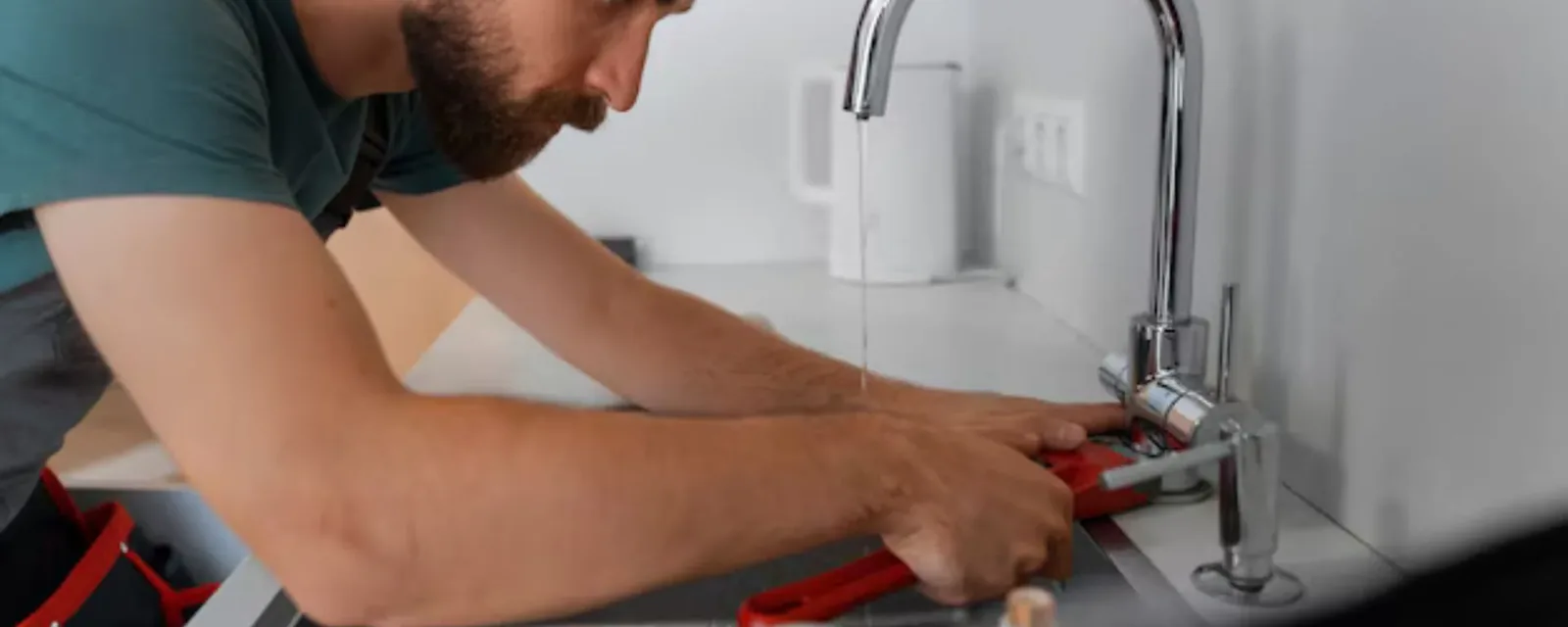
Start at the stopper, not the pipe
A bathroom sink collects hair, toothpaste, soap and skin oils, and almost all of it settles in the first few inches of the drain. That is also where the pop-up stopper lives. A stopper that does not lift all the way, or one with a hair mat wrapped around it, slows the sink as much as a clog would.
Before you grab a drain product, open the stopper and look. It takes ten minutes and costs nothing.
Clean the pop-up stopper
Most bathroom sink stoppers lift out or unscrew from below. This is the usual order.
Look for the lift rod.
The thin rod behind the faucet moves the stopper through a pivot rod under the sink.
Release the pivot.
Under the sink, loosen the nut where the pivot rod enters the tailpiece, then slide the rod out.
Lift out the stopper.
Pull the stopper straight up. Hair and a gray film are usually wrapped around it.
Wipe and clear.
Clean the stopper and reach into the drain opening with a hair-grabbing tool or a bent wire.
Reassemble.
Replace the stopper with the notch facing the pivot rod, tighten the nut by hand and test it.
If the stopper pops up halfway because the linkage is out of adjustment, the sink drains slowly even when it is spotless. Check how far it lifts.
The overflow channel and soap scale
Look at the small opening near the top of the basin. That overflow channel runs down inside the sink and joins the drain below the stopper, so it can hold the same grime you just cleaned out, and you cannot see it.
Soap scum hardens into a gummy scale on the inside of small pipes. A thin brush and warm soapy water clear the overflow, and a gentle rinse flushes the loosened material. Skip the strong products, which can damage chrome and plastic parts.
Cleaned the stopper and it is still slow? Call the 24/7 line. The cause may be farther down than you can reach.
Call (970) 708-6013What the symptoms point to in a bathroom sink
| What happens. | Likely cause. | Fix. |
|---|---|---|
| Drains well, then slows near the end. | Hair on the stopper or tailpiece. | Clean the stopper and the drain opening. |
| Water rises in the basin when the tub drains. | Shared branch is restricted. | Cable the branch or ask for a camera look. |
| Slow only with the stopper closed. | Stopper not lifting far enough. | Adjust the linkage. |
| Gurgling after you pull the plug. | Trap or vent issue. | Check the trap, then the vent. |
| Slow every few weeks. | Soap scale narrowing the pipe. | Clear the pipe, not just the stopper. |
Older bathrooms near Parish Avenue
The original Johnstown townsite was platted in 1902, and homes near Parish Avenue are the likeliest to have older sink drains, small-diameter pipe and bathrooms that have been remodeled around the original lines. In a bathroom like that, a slow sink may share a drain run with other fixtures in a way that is not obvious.
Ask whoever remodeled the room what lies behind the wall. A plumber who knows the layout can pick between a hand tool at the trap and a cable through the branch, and can say whether a camera makes sense.
Bathrooms in newer Johnstown subdivisions tend to have simpler layouts, so a slow sink there is more likely a stopper or trap problem than anything buried.
Pulling the trap, carefully
If the stopper and overflow are clean, the next suspect is the P-trap, the curved pipe under the basin. Put a bucket underneath, loosen the slip nuts by hand, and tip the trap into the bucket.
A trap full of gray sludge is a good sign, because you have found the problem. Rinse it, reconnect it hand-tight plus a quarter turn, and run water to check for drips. If the trap is clean, the restriction lies farther along the line and a plumber's cable reaches it.
A persistent slow bathroom sink is a job for drain cleaning, and a bathroom sink that leaks around the faucet or supply lines falls under faucet repair.
Habits that keep a bathroom basin draining
A few small routines stop most repeat slowdowns, and none of them need tools.
- Rinse the basin with hot water after shaving or brushing so loose hair and paste do not settle.
- Lift the stopper and wipe it with a cloth every month or two.
- Use a mesh drain strainer if the household has long hair.
- Keep hair products and oils away from the basin, since they harden in the tailpiece.
- Run hot water for a full minute at the end of the day to soften soap film.
Take a quick photo of the stopper each time you clean it, so you can see how fast the buildup returns. If the sink slows again within a few weeks of cleaning, the buildup is deeper than the stopper, and that is the point to book a cable visit instead of repeating the same cleaning.
Bathroom drains in the neighboring towns
We see the same stopper and scale pattern in homes across the area. Homeowners in Milliken and Mead call about slow bathroom sinks more often than any other drain complaint, since one household uses the basin several times a day.
If one basin is slow in the master bath and not in the guest bath, you can rule out the main line. If every bathroom is slow, mention that on the call.
Bathroom sink drainage questions
Surface cleaning rarely reaches the stopper pivot, the overflow channel or the scale inside the tailpiece. Take the stopper out and check the overflow before you decide the pipe is the problem.
Over time, yes. It dries into a paste that binds with soap and hair. Rinsing the basin with hot water after brushing helps, and a periodic cleaning of the stopper keeps it from building up.
Look under the sink for the pivot rod nut and loosen it first. Some stoppers twist out and others lift straight up. Do not force it, because the linkage or the finish can break.
Gurgling suggests air is being pulled through the trap, which points to a restricted drain or a vent problem. If it happens with more than one fixture, call.
We recommend against it. The product can damage fixtures, harm the trap and splash when you open the pipe. A hand tool and a clean stopper handle most slow sinks.
Not necessarily. Most slow sinks are stopper and trap problems. If the sink is still slow after both are clean, a camera can show whether the pipe itself is the issue.
Call when the stopper and trap are clean and the sink is still slow, when other fixtures are slow too, or when water comes back up in the tub or floor drain.