You think there is a leak but cannot see it
Most leak calls start with a symptom and not a pipe. The water bill jumped, the meter keeps moving with everything off, a ceiling stain appeared, or a patch of floor feels warm. Emergency leak detection is available 24/7, and the first question the dispatcher asks is where you see the sign.
If water is actively spraying or pooling, shut off the main water valve and call right away. If you only suspect a leak, take a photo of the meter and the stain, and the plumber will start from there.
Leak detection finds where the water is escaping. Repair is a separate step, which might be a small patch or a pipe section. Finding the spot first keeps the repair as small as it can be.
Signs of a hidden leak
Any one of these is worth a call. Several together almost always mean water is escaping.
- The water meter dial or low-flow indicator moves while every fixture is off.
- A water bill climbs with no change in how the household uses water.
- A ceiling, wall or baseboard has a stain, bubbled paint or a musty smell.
- A floor feels warm in one spot, or flooring is lifting or cupping.
- Water pressure drops at several fixtures at once.
- Hissing or running water can be heard in the walls with everything off.
Mold and soft drywall mean the leak has been going for a while. Move belongings away from the area and mention it on the call.
How a leak gets found
A good trace goes from broad to narrow. The plumber rules out the easy suspects first, then closes in.
Meter test.
Every fixture is shut off and the meter is watched for movement.
Isolate the system.
Shutting valves in sequence shows if the leak is before the house, in the supply lines or on a single branch.
Pressure test.
A gauge on a closed section shows if it holds pressure or bleeds off.
Pinpoint.
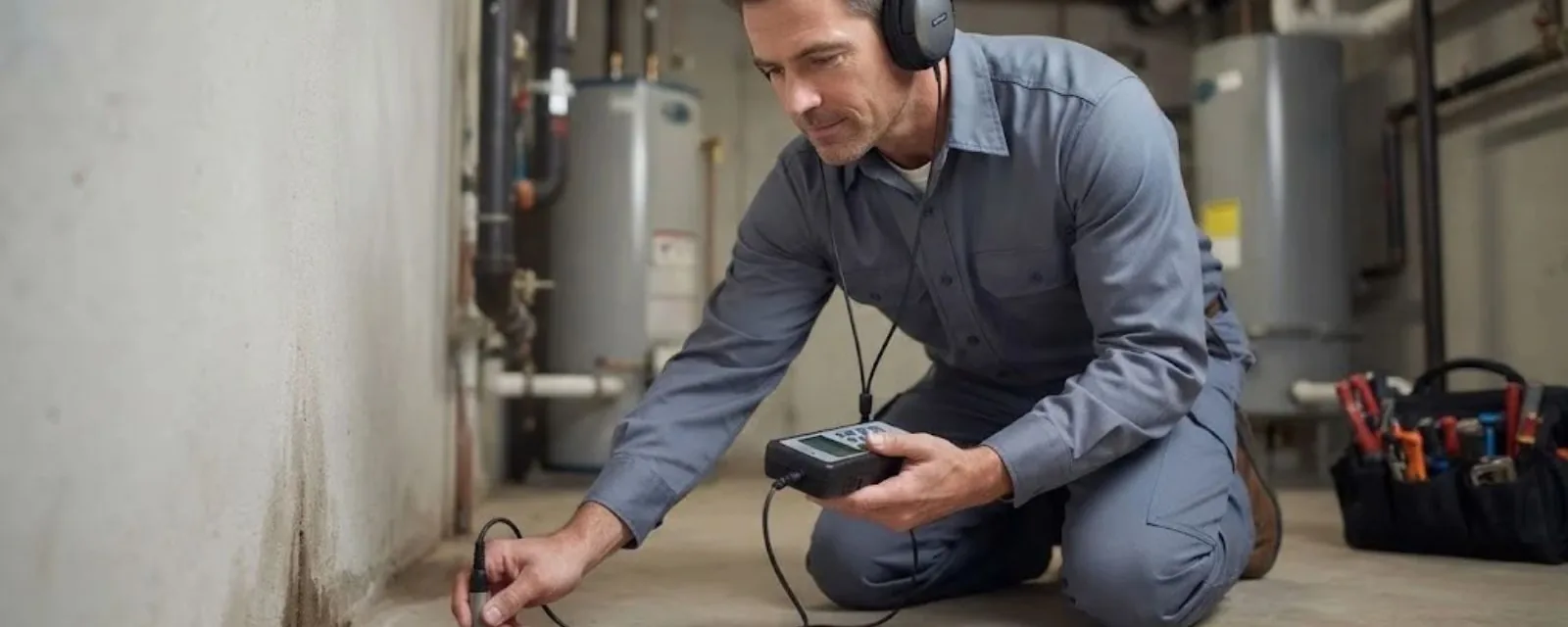
Listening gear, a thermal camera or moisture meters narrow the location to a small area.
Confirm and report.
The plumber marks the spot and explains the repair options before opening anything.
When a leak is an emergency
Not every leak is an emergency, but these are.
- Water is flowing from a ceiling or light fixture. Shut off the power to that area at the breaker and keep clear of the room.
- Water is spraying or pooling in a basement, utility room or crawl space. Close the main water valve at once.
- The meter spins fast with everything off, and a section of floor feels hot or soft.
- A gas smell accompanies the damp area, such as near a water heater. Leave the building first and call the gas utility or 911.
Call (970) 708-6013 after you have shut off water and power. Nights, weekends and holidays reach the same dispatcher, and photos of the meter or the stain help.
Meter running or a high water bill
A high bill is a common first sign. To check, turn off every tap, appliance and irrigation zone, then watch the meter. A moving dial or a spinning low-flow triangle with nothing on means water is escaping somewhere between the meter and the fixtures.
From there the plumber isolates the house. A leak that stops when the main valve inside is closed is on the supply side of the house, and a leak that continues is on the buried line between the meter and the house. A toilet that runs on after flushing is the most common culprit, and it shows on the meter too. Check yours before you pay for a trace.
Where leaks hide and how they show up
| Location. | What you may notice. | Common source. |
|---|---|---|
| Ceiling or wall. | Stain, bubbled paint, sagging drywall. | Supply line, drain line, fixture or appliance connection. |
| Under a slab. | Warm floor spot, rising bills, sound of water. | Supply line in or under the concrete. |
| Crawl space or basement. | Damp walls, musty smell, wet insulation. | Joints, valves or a failing supply line. |
| Buried service line. | Wet ground, low pressure, meter moves. | The pipe from the meter to the house. |
| Yard or meter box. | Soggy spot, bubbling water, standing water. | Fittings near the meter or the line. |
| Irrigation system. | Overly wet zone, low sprinkler pressure. | A broken head, valve or buried line. |
Once a buried leak is traced, water line repair covers the dig. Before anyone digs, call Colorado 811 at least two full business days ahead. The call is free.
Under the floor, in the walls and above the ceiling
Slab leaks show up as a warm spot, a floor that stays damp, or a bill that keeps rising. The pipe is under or in the concrete, so finding the spot first avoids breaking up more floor than needed.
Ceiling and wall leaks often come from a bathroom above, a drain line or an appliance supply line. The stain is rarely right under the leak, because water travels along framing before it shows. A moisture meter and a thermal camera trace it back.
Crawl space and basement leaks are easier to reach, but the damp can hide behind insulation. Wet insulation and a musty smell are the clues. A leak at a water heater, such as one by an attic or garage wall, is covered by water heater repair.
Meter still moving with everything off? Call the 24/7 line. A short test usually tells the plumber if the leak is inside the house or on the buried line.
Call (970) 708-6013Johnstown yards, pools and irrigation
If your yard has sprinklers, a broken head or buried zone line can mimic a house leak on the meter. Shut off the irrigation controller and check the meter again before you assume the leak is inside. A zone that stays soggy tells you where to look.
If you have a pool or spa, ask whether water is dropping faster than evaporation explains, and tell the dispatcher. The plumber can check the plumbing lines, though pool equipment and shell leaks may need a pool specialist. Your water utility can answer questions about the meter itself.
Commercial properties and landlords
Shops, restaurants and offices have longer pipe runs and more fixtures, and a leak can run unnoticed over a weekend. Detection work on larger buildings takes more time, and not every commercial job fits the same approach. Describe the building on the call so the right plan is made.
Landlords can book on behalf of tenants. Give the dispatcher the address and the tenant contact so the plumber can arrange access.
What changes the cost of finding a leak
Leak work is priced by the effort of the search.
- How hidden the pipe is A leak behind an open access panel takes less time than one under a slab.
- Size of the property A large house or a long buried line takes more time to test.
- Methods needed Meter tests are quick. Thermal imaging and listening gear take longer.
- Access for repair Digging, breaking a floor or opening a wall adds work after the trace.
- Time of the call An after-hours trace is dispatched differently from a daytime appointment.
Sudden accidental water damage is commonly covered, and some policies help with the cost of reaching a hidden leak, but slow wear leaks usually are not. Policy terms differ, so read yours closely. A real price comes from (970) 708-6013, and it is clear before work starts.
Leak detection questions from Johnstown homeowners
Yes. The 24/7 line at (970) 708-6013 takes active leak calls any hour. If water is spraying or pooling, shut off the main water valve first, then call. For slow suspected leaks, the dispatcher may book a daytime trace.
Turn off every tap, appliance and irrigation zone. Then look at the meter dial or low-flow indicator for a few minutes. If it moves, water is escaping somewhere. Photograph the reading and tell the dispatcher.
A running toilet, a leaking irrigation line or a leak on the buried service line are common causes. A meter test with all fixtures off shows if the water is leaving the house. A trace finds out where.
Not to find it. The plumber uses a meter test, pressure test and listening or thermal tools to narrow the spot. Opening a wall or floor usually comes after, to repair a leak that has been located.
Yes, by testing the lines and using listening tools to pinpoint the spot. Slab leaks are repaired by rerouting the line or by opening the slab at the exact point.
Water travels along framing before it shows. The source could be a pipe, a roof or a vent. A moisture meter and a trace from the high point of the stain show the true source.
Yes if digging is involved. Colorado 811 is free and must be called at least two full business days before digging so buried utilities are marked.