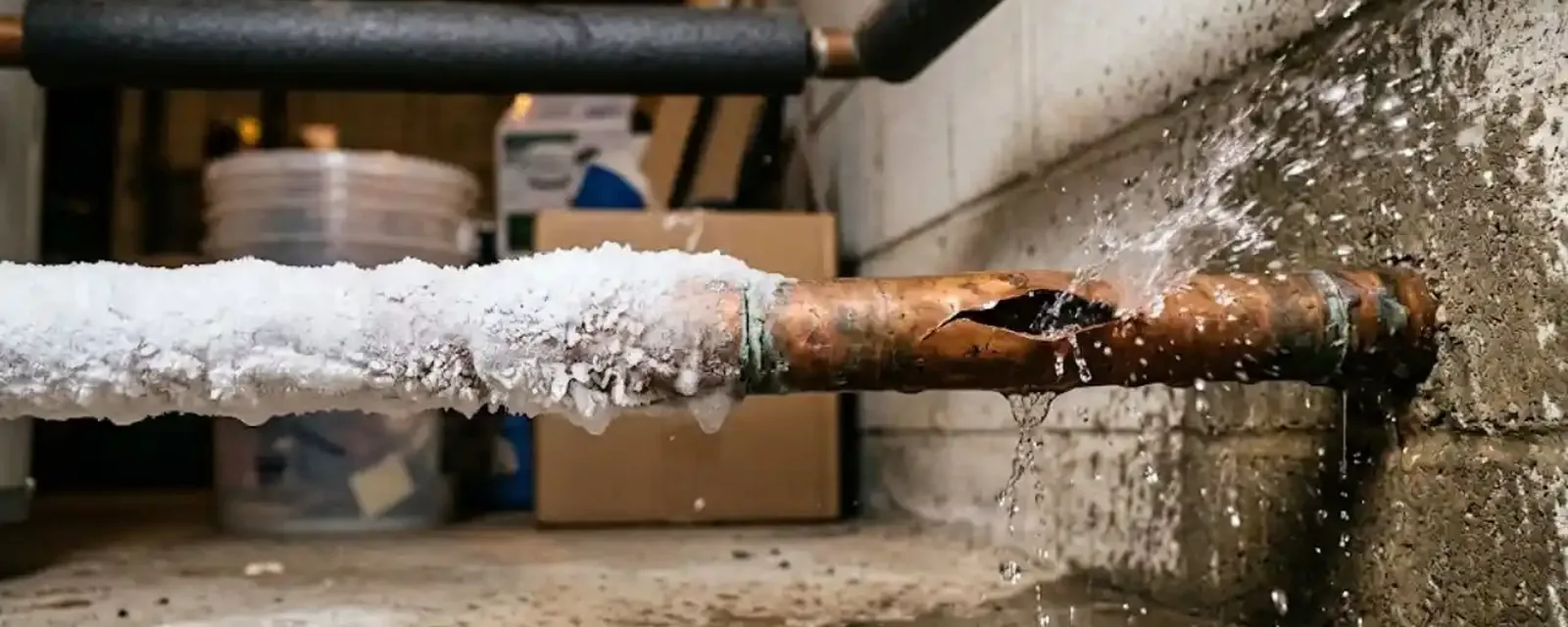
When a burst pipe is an emergency, do this first
Water moving through a wall or ceiling is an emergency at any hour. Follow this order, then call (970) 708-6013. The line is answered 24/7, including nights, weekends and holidays.
- Shut off the main water valve. It is usually near the water heater, on a basement wall, or where the line enters the house. Turn it fully closed.
- Open a faucet at the lowest point in the house, like a basement sink or hose bib, so the water left in the pipes can drain out.
- Switch off power to any wet area if you can reach the breaker without stepping in water. If you cannot, stay out and tell the dispatcher.
- Move furniture, rugs, boxes and electronics out of the path of the water, and put buckets or towels under any drip.
- Turn off the water heater if the burst is on the hot side or the tank may be drained. A tank that runs empty can be damaged when it heats.
- Take photos of the damage before you clean up, because your insurer may ask for them.
If the main valve will not close, say so on the call. That changes what the plumber brings and how fast the street shutoff may be needed.
Burst pipe repair across Johnstown, CO
A burst pipe repair has two jobs. First, stop the water. Second, fix the pipe so it does not fail again a week later. A plumber cuts out the split section, checks the pipe on both sides for more damage, and joins in new pipe with proper fittings.
The visit can also include drying advice, a check of other exposed lines, and a pressure test before anything is closed up. Repairs happen in attics, crawl spaces, garages, basements and inside finished walls.
How to thaw a frozen pipe without making it worse
A pipe that is frozen but not yet split is a chance to prevent a burst. Do this carefully, and stop if you see water leaking.
Open the faucet.
Leave the tap on the frozen line open. Water will start to trickle as the ice melts, and that flow helps clear the rest.
Warm the pipe gently.
Use a hair dryer on low, warm towels wrapped around the pipe, or a heating pad. Start at the faucet end and work toward the frozen spot.
Warm the room.
Open cabinet doors under sinks and raise the thermostat so heated air can reach pipes on outside walls.
Keep checking.
Watch the pipe for cracks, bulges or drips while it thaws. If water appears, shut off the main valve and call.
Call if it will not thaw.
If you cannot find the frozen spot or nothing moves, a plumber has safer tools than a household one.
Never use a propane torch, a blowtorch, a camp stove, a kerosene heater or any open flame to thaw a pipe. Flame can ignite framing and insulation inside the wall, and it can overheat the pipe until it splits or a joint lets go. Do not use an electric device while standing in water either.
What caused the pipe to split, and what that means for the repair
The cause matters because it tells the plumber whether one repair is enough.
| Cause. | What it looks like. | What the repair involves. |
|---|---|---|
| Frozen water expanded. | A lengthwise split, often on an outside wall or in a crawl space. | Cut out the split and check the pipe near it, then insulate the run. |
| Corrosion or age. | Pinholes, green crust, or leaks at several spots. | Replace the worn section or repipe if the whole run is failing. |
| Pressure spike. | A burst near a fitting or a hammering sound in the walls. | Test pressure, then repair or add a regulator. |
| Failed valve or connector. | Spray or steady flow at a shutoff or supply line. | Replace the valve or hose, which is usually quick. |
| Physical damage. | Leak after drilling, nails or a shifted pipe. | Repair the hit section and check supports. |
If you see leaks at more than one spot, the pipe may be near the end of its life. The repiping page covers replacing worn runs instead of patching them one at a time.
Water coming through a ceiling? Shut off the main valve and call the 24/7 line. Tell the dispatcher which room is wet.
Call (970) 708-6013Why Front Range pipes split in cold snaps
Johnstown sits at 4,994 feet, on the open plains west of where the Big Thompson and Little Thompson rivers meet. Cold air settles fast on a clear night out here, and an uninsulated line in an exterior wall or an unheated garage can freeze before the furnace catches up.
The practical step is to know where your exposed pipes are before the weather turns. Look at crawl spaces, garage walls, the line to an outdoor hose bib and any pipe near a vent or a crack in the wall. A plumber can show you what to insulate, and a cold snap is a poor time to learn which line is exposed.
Keep a pipe from freezing in the first place
A few small habits make a burst much less likely.
- Disconnect garden hoses and shut off the indoor valve to outdoor spigots before freezing weather.
- Insulate pipes in garages, crawl spaces and exterior walls with foam sleeves.
- Open cabinet doors under sinks on outside walls during a hard freeze.
- Let a faucet drip on the coldest nights if a line has frozen before.
- Keep the thermostat set, even if you are away from the house.
- Know where your main shutoff is and that every adult in the home can close it.
Heat tape on exposed lines is another option, and it needs correct installation. Ask a plumber to look at the run before you buy any.
Copper, galvanized and supply-line failures
Not every burst comes from frost. A copper line with pinholes, a galvanized pipe corroded from the inside, or a braided supply hose behind a toilet can all fail without warning. Supply lines and shutoff valves are the cheapest to fix, but they flood a room just as fast.
If the leak is at a faucet or toilet connection, the fix may be a new valve or line instead of a pipe repair. The faucet repair page covers failing shutoffs under sinks.
Drain pipes can split too, and a leak in a drain line looks different. Water appears when fixtures drain, not when they are off. Say so on the call.
What changes the price of a burst pipe repair
No two bursts are alike, so the price depends on the pipe and the access.
- Where the pipe is A split in an open basement ceiling is quick work. A pipe behind tile or inside a slab takes opening and patching.
- Pipe material Copper, PEX, CPVC and galvanized steel each use different fittings and tools.
- How much is damaged A single split is a small repair. A long run with corrosion may be better replaced than patched.
- Shutoff access A working main valve limits damage and saves time on the call.
- When you call A 2 a.m. emergency is dispatched differently from a booked daytime repair.
Most homeowners policies cover sudden, accidental water damage, such as a pipe that burst overnight, but not wear-related repair or slow leaks. Read your own policy to see what yours says. Call (970) 708-6013 for a clear price before work starts, and keep photos of the damage for your insurer.
After the water is stopped
Once the leak is fixed, wet materials still need attention. Drywall, insulation and carpet that stay damp can grow mold, and a plumber can tell you which areas look too wet to ignore.
If you cannot tell where the water is coming from, leak detection can trace a hidden line. Families in Milliken and the other nearby towns call the same 24/7 number for this kind of emergency.
Burst pipe questions from Johnstown homeowners
Yes. The line at (970) 708-6013 is answered 24/7, including holidays. Shut off the main water valve, then call and describe where the water is coming from. The dispatcher will tell you what to do until a plumber arrives.
No. Never use a propane torch, blowtorch or any open flame on a pipe. Flame can ignite wood framing and insulation inside the wall, and it can overheat the pipe until it cracks. Use a hair dryer on low or warm towels, and call a plumber if it does not thaw.
Most homes have it near the water heater, on a basement wall or where the line enters from the street. Some have a second valve at the meter. Find it now, before an emergency, and test that it turns.
Often yes. A pipe can crack where it froze and only leak once the ice melts. Watch it closely, and have it looked at if you see drips, stains or low pressure after the thaw.
Most homeowners policies cover sudden accidental water damage but not wear-related repair. Coverage varies, so read your own policy and ask your insurer before you start cleanup. Take photos first.
Yes. The plumber cuts out the damaged section and joins in new pipe with proper fittings. If the pipe is corroded in several places, replacing the whole run may make more sense than patching one spot.
Insulate exposed lines, disconnect hoses, and open cabinet doors on cold nights. For a line that has frozen before, a plumber can look at insulation or adding heat tape and tell you which fits that run.