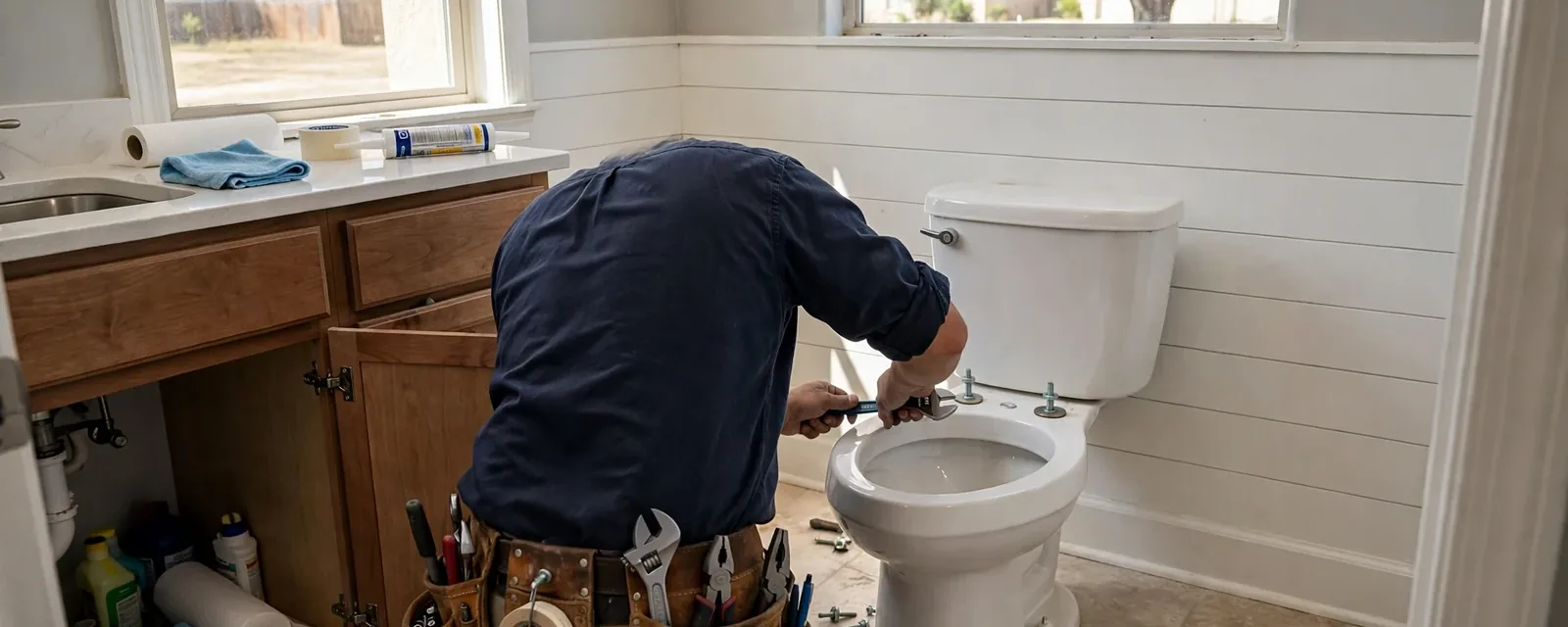
When a toilet problem is an emergency
Most toilet trouble is annoying. Some of it is urgent, and these steps help while the plumber is on the way.
- Reach behind the toilet and turn the small shutoff valve clockwise until the water stops flowing.
- If the bowl is rising, lift the tank lid and push the flapper down, or lift the float, to stop more water entering.
- Do not flush again, even to test. Each flush can push more water out.
- Put towels around the base and move rugs and anything electrical away from the wet area.
- If water is rising in other fixtures, stop using all of them and treat the problem as a main line issue.
Emergency toilet repair is available 24/7 in Johnstown. Tell the dispatcher whether the water is clean or sewage, because it changes what the plumber brings.
Toilet repair and installation in Johnstown, CO
A toilet is simple on the outside and fussy on the inside. Most problems come down to a handful of parts, such as the fill valve, the flapper, the wax ring at the floor, the supply line and the flange that holds the whole thing down.
The plumber starts by finding where the problem begins, then repairs it or says honestly that a new toilet makes more sense. Toilet installation is part of the same service, for a swap of an old unit or a new one set in a remodeled bathroom.
Symptoms and the usual cause
What the toilet is doing points to the part that needs attention.
| Symptom. | Likely cause. | Usual fix. |
|---|---|---|
| Runs after flushing. | Worn flapper or a fill valve that does not shut off. | Replace the flapper or fill valve. |
| Weak flush. | Clogged rim jets, low tank water or a partial clog. | Clear the jets, adjust the tank, or cable the line. |
| Water around the base. | Failed wax ring or loose flange bolts. | Reset the toilet with a new seal. |
| Rocking on the floor. | Loose bolts or a damaged flange. | Tighten, shim or repair the flange. |
| Drips from the supply line. | Worn connector or valve. | Replace the supply line or the shutoff valve. |
| Bowl rises and will not go down. | A clog in the toilet or the line. | Plunge or auger, then check the main if it repeats. |
The toilet that will not stop running
A running toilet wastes water around the clock and often shows up first as a higher water bill. The cause is almost always a flapper that no longer seals or a fill valve that fails to shut off at the right level.
Both parts are inexpensive, and a plumber can usually swap them in a short visit. A trickle that goes on all night is worth fixing soon, since you pay for every gallon even though nobody sees it. If the water bill is high and no toilet seems to run, leak detection can check the rest of the house.
Water on the bathroom floor? Shut the valve behind the toilet, then call the 24/7 line and describe what you see.
Call (970) 708-6013Leaks at the base and the wax ring
A toilet sits on a wax or foam ring that seals it to the drain. When that ring fails, water seeps out at the base during a flush and can soak into the subfloor before anyone notices.
A damp floor, a soft spot near the toilet, or a stain on the ceiling below are signs to act soon. Resetting the toilet with a new seal is a routine repair, but the longer water leaks, the more flooring may need replacing too.
Rocking is a related warning. A toilet that moves under you has a loose or damaged flange, and the seal will keep failing until the flange is fixed.
Replacing or installing a toilet
Choose the right toilet.
Height, bowl shape, rough-in distance and flush type all affect fit and comfort.
Remove the old one.
The water is shut off, the tank is drained, and the old toilet and seal are pulled.
Check the flange and floor.
A damaged flange or soft floor is repaired before the new toilet goes down.
Set and test.
The new toilet is leveled, secured, connected to the supply and tested with several flushes.
A bathroom remodel with new fixtures and moved plumbing may be better handled as plumbing installation work.
What to do before the plumber arrives when a toilet overflows
Most overflows can be slowed in under a minute if you know where to reach. Do these in order.
- Lift the tank lid and push the flapper down, or turn the small valve behind the toilet clockwise to stop the refill.
- Do not flush again, and stop using other fixtures on the same line if the bowl is rising.
- Put towels around the base, lift rugs, and keep children and pets out of the water.
- Do not pour chemical drain cleaner into a full bowl, since it can splash back.
- Call the 24/7 line if water keeps coming and the shutoff will not close.
What changes the cost of toilet work
A fill valve and a full replacement are very different jobs, so the price depends on what is wrong.
- Repair or replace Replacing a small internal part is quicker than removing and resetting the toilet.
- The toilet itself Basic, comfort-height and wall-hung models vary widely in price.
- Flange and floor condition A damaged flange or rotted subfloor adds repair work.
- Clog or no clog Pulling a toilet to reach a stubborn blockage takes more time.
- When you call After-hours emergencies are dispatched differently from daytime visits.
Most homeowners policies cover sudden accidental water damage but not wear-related repair, and a slow leak at a worn seal is often treated as wear. Read your own policy to see what yours says. Call (970) 708-6013 for a clear price before work starts.
Clogs, backups and when it is more than the toilet
A single clogged toilet usually clears with a plunger or a closet auger. If the toilet backs up again and again, or another drain gurgles when it flushes, the blockage is farther along the line.
At that point the problem belongs to drain cleaning or, if the main is blocked, sewer line cleaning. Telling the dispatcher what else in the house is slow helps the plumber bring the right tools the first time.
Small habits that protect your toilets
- Flush toilet paper only, and put wipes, cotton and hygiene products in the trash.
- Check the tank for slow leaks by adding a few drops of food coloring and waiting.
- Replace a stiff, worn supply line before it fails behind the toilet.
- Know where each shutoff valve is, and turn it now and then so it does not seize.
- Fix a wobbly toilet right away instead of waiting for the floor to rot.
Toilet repair questions
Yes. The line at (970) 708-6013 is answered 24/7. An overflowing toilet, a supply line spraying water or a toilet leaking through a ceiling can all be reported at any hour. Shut off the valve behind the toilet first if you can.
Turn the oval or round valve on the wall or floor behind the toilet clockwise until it stops. If it will not turn or keeps leaking, shut off the main water valve for the house and call.
If the problem is a cheap internal part, repair is usually the better choice. If the porcelain is cracked, the toilet clogs constantly or you want a better flush, replacement makes more sense. The plumber can tell you which applies.
Loose bolts, a damaged flange or an uneven floor are the usual reasons. A rocking toilet strains the seal and can leak under the floor without showing at the surface.
Yes. The toilet is lifted, the ring is replaced and the toilet is reset. The plumber will check the flange and the floor while it is up.
It can be. If several clogs happen in a short time or other drains gurgle, the line is probably partly blocked. A cable or a camera can show whether it is the toilet or the pipe.
Yes. Tell the dispatcher whether the toilet is a swap or a new location, because moving a toilet may mean adjusting the drain. Larger projects can be scheduled as installation work.