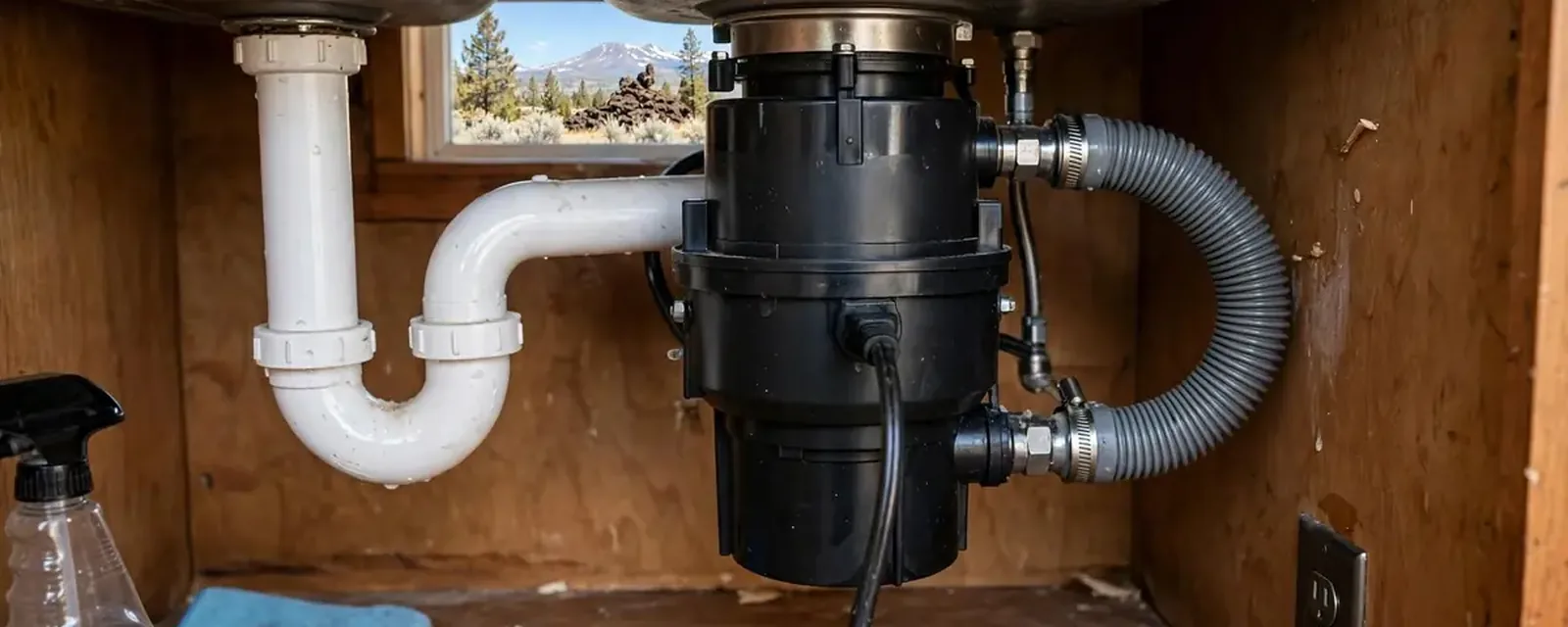
When a leaking disposal needs a call right now
A slow drip into a bowl can wait for the morning. A steady stream, a wet electrical connection or a cabinet floor filling with water cannot, and our line is open 24/7 for exactly that.
- Switch the disposal off at the wall and do not run it again.
- Unplug the unit if the cord is dry and reachable. If the outlet or cord is wet, leave it and switch off the breaker instead.
- Close the sink's hot and cold supply valves under the cabinet, or the main water valve if they will not turn.
- Move cleaners, boxes and anything else off the cabinet floor, and put a bowl or pan under the leak.
- Take a photo of where the water is coming from, then call (970) 708-6013.
Water and electricity in the same cabinet is the real hazard here, so treat a wet outlet or cord as a reason to stop and call.
Find where the water really starts
Disposals leak from several places, and only some of them mean the unit is finished. Dry the whole assembly with a towel, put a few sheets of dry paper towel on the cabinet floor and run water into the sink with the disposal off. Then watch where the first drop appears.
Top of the unit points to the sink flange or mounting ring. The side points to the dishwasher hose or the drain outlet. The very bottom, near the reset button, points to an internal seal that has failed.
Where the leak appears and what it means
| Leak location. | Usual cause. | Typical outcome. |
|---|---|---|
| Under the sink flange at the top. | Dried putty or a loose mounting ring. | Often repairable by reseating the flange. |
| Drain outlet on the side. | Loose bolts or a worn gasket. | Repairable if the housing is intact. |
| Dishwasher hose connection. | Loose clamp or cracked hose. | Usually a hose or clamp swap. |
| Bottom of the housing. | Failed internal shaft seal or a cracked casing. | Replacement is the normal answer. |
| Around the reset button. | Seal wear at the base. | Replacement is the normal answer. |
Why a bottom leak usually means a new disposal
A disposal has a motor on the bottom and a grinding chamber above it. A seal keeps the water in the chamber and out of the motor. When that seal wears out, water follows the shaft downward and drips from the base.
That seal is not sold as a repair part for most household models, and a leak from there has often already reached the motor. Tightening bolts will not fix it. The practical answer is replacement, which is why we start with a quick check of the easier leak points and then move to a new unit.
Our garbage disposal repair and installation visits include confirming where the leak starts before recommending a swap.
Not sure whether it is the flange, the hose or the housing? Call and a plumber can walk you through the checks.
Call (970) 708-6013If your disposal came with the house
Many Johnstown houses were built in the last fifteen years, as the town grew from 9,887 people in 2010 to 17,303 in 2020. A disposal installed during construction is often a basic builder model, and a seal failure in a unit that age is not unusual.
Check your closing paperwork and the label on the disposal for a manufacturer warranty before you pay for a new one. Do not assume coverage, but ask the manufacturer before you throw anything out.
If the cabinet floor has been wet for some time, water can run along the sink supply and into the wall. That is where leak detection helps, since it finds moisture you cannot see.
What a replacement involves
Replacement is the same job as a first installation, minus the new wiring. The old unit comes off, the flange is reseated or replaced, and the new unit hangs on the mounting ring and reconnects to the drain and the dishwasher hose.
Pricing depends on the unit you choose, how easily the old mount releases, any damage under the sink and whether the trap needs rework. A plumber quotes a clear price before work starts once they have seen the cabinet.
The same swap is routine for homeowners in Milliken and Berthoud, and the leak test at the end is identical.
Before you buy the replacement
A few measurements and photos make the swap go smoothly and stop you buying the wrong unit.
- Photograph the label on the old unit for the model number and horsepower.
- Note whether the dishwasher hose connects to the side of the disposal.
- Check whether the power is a plug or a hardwired cable.
- Measure the space from the sink bottom to the cabinet floor.
- Look at the mounting ring for rust, which may mean the sink flange needs replacing too.
- Have a bucket, towels and a flashlight ready so the swap is not interrupted by a search for tools.
Check the cabinet for damage
Particleboard cabinet floors swell and soften when they stay wet. Press a thumb into the corner nearest the leak. If it feels spongy, say so when you call, because the cabinet may need attention along with the disposal.
Mold likes a damp, dark cabinet. Dry the space with a fan after the repair and watch it for a few days. Most homeowners policies cover sudden accidental water damage but not wear-related repair, so read your own policy for a slow leak.
Leaking garbage disposal questions
Usually no. A bottom leak points to a worn internal seal or a cracked housing, and those are not normally repaired on a household unit. A plumber confirms the source and replaces the disposal.
Do not run it. Water near the motor and wiring is a shock risk, and the leak will keep wetting the cabinet. Turn it off and call.
Dry everything, run the sink and watch where the first drop forms. A drop at the flange, hose or outlet is a connection. A drop that starts at the base or reset button is the seal.
No. Leaks at the sink flange, the drain outlet and the dishwasher hose are often repairable. Only a leak that starts at the bottom or from the casing normally means replacement.
It depends on your paperwork and the age of the unit. Check the label and ask the manufacturer or your home warranty provider. Do not discard the unit until you know.
It can. Water can follow the supply lines into the wall and floor below the sink. If the cabinet stays damp after the repair, ask for a leak check.
Say where the water appears, whether it is a drip or a stream, and whether the outlet or cord is wet. Mention a dishwasher connection if there is one.