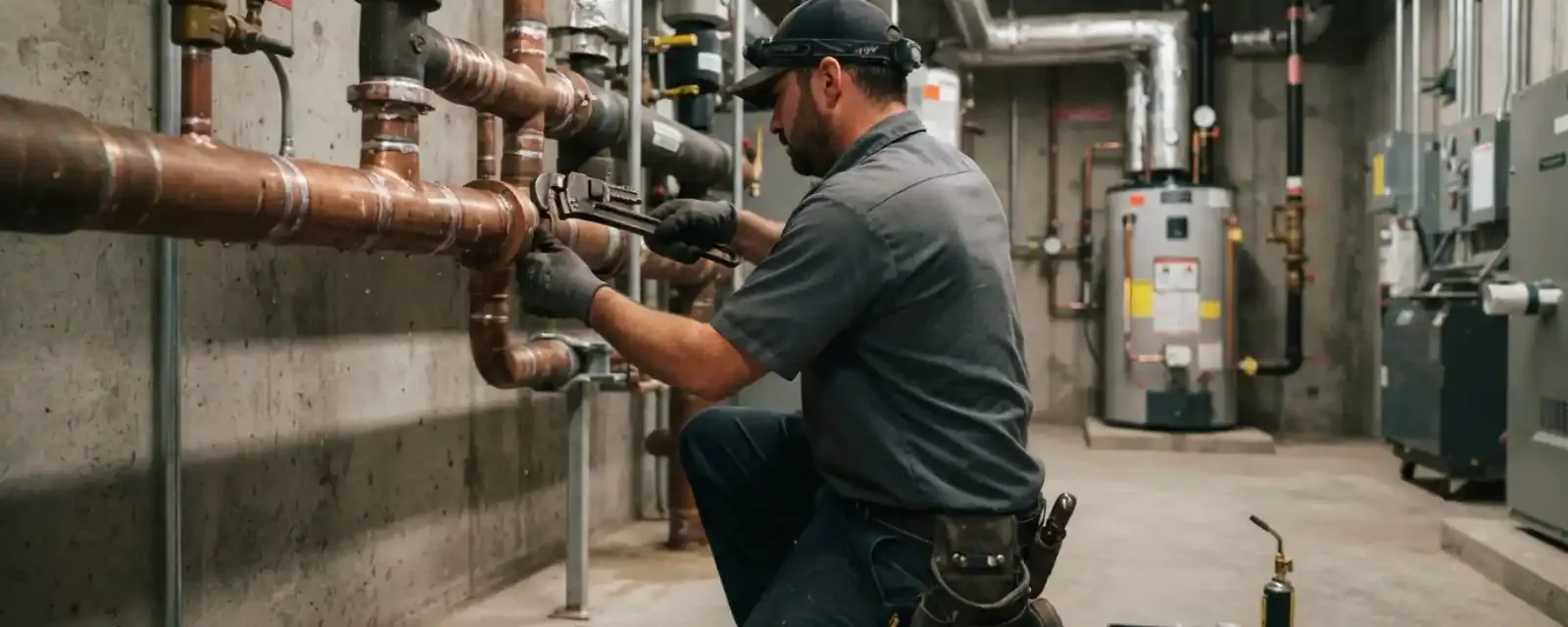
Copper is a material cost and a labor cost
When homeowners search for copper pipe cost, they often find a price per foot at a hardware store. That number is only the pipe. A real plumbing job also includes fittings, valves, solder or crimp rings, hangers, labor, wall or ceiling repairs and testing.
Copper prices also move with the metal market, so a figure from last year may not match today's. That is one more reason we do not print a dollar range here. A plumber looking at your house can price the job on current materials.
What to do while you wait for a plumber
Pipe trouble sometimes shows up before you have compared any materials. If a copper line is leaking now, the cost question can wait.
- Shut off the main water valve and drain the lines from the lowest faucet.
- Do not wrap a leaking joint with tape and leave it, because pinholes spread along the same pipe.
- Keep power off near wet areas and move valuables out of the way.
- Photograph the leak so the plumber can see how it looked before it was shut off.
- Call the 24/7 line for any leak you cannot stop.
What changes the price of a copper plumbing job
These are the factors a plumber weighs when pricing copper work.
- Pipe type and size Copper comes in different wall thicknesses and diameters. Thicker pipe and larger sizes cost more.
- Length and layout More fixtures and longer runs mean more pipe, more fittings and more time.
- Fittings and valves Elbows, tees, couplings and shutoff valves add up, especially where the layout is complicated.
- Access Open basements and crawl spaces are quicker than finished walls and ceilings.
- Joining method Soldered joints, press fittings and compression fittings each have different material and labor costs.
- Repairs after the work Drywall, paint and flooring may need patching after pipes are replaced.
- Scope A single leaking section is a different job from replacing all the supply lines in the house.
Most homeowners policies cover sudden, accidental water damage from a burst pipe but not the cost of replacing worn or corroded plumbing. Read your own policy to see what yours says. For a real number, call (970) 708-6013 and describe the pipes. You get a clear price before work starts.
Copper compared with other supply pipe
Copper is not the only choice. Here is how it compares with the most common alternatives.
| Pipe. | Strengths. | Trade-offs. |
|---|---|---|
| Copper. | Durable, long track record, handles heat well. | Material is usually costlier and joints take more skill. |
| PEX. | Flexible, fewer fittings, quicker to run in walls. | Not for sunlight exposure, and fittings need the right tools. |
| CPVC. | Lower material cost, resists some corrosion. | Brittle with age and heat in some situations. |
| Galvanized steel. | Found in older homes. | Corrodes from the inside and tends to restrict flow. |
A plumber can tell you which one suits your house, your budget and your water. There is no single best answer.
Pipe leaking or burst? Close the main shutoff and call the 24/7 line. A plumber can stop the leak first and talk options after.
Call (970) 708-6013Your water supply and your pipes
How long a pipe lasts depends partly on the water inside it. Water chemistry varies by supply, and the Town of Johnstown runs its own water treatment plant. Ask your water utility for its quality report or test your tap before choosing a pipe material for a repipe.
Water in the Berthoud area, for example, comes from purchased Little Thompson water, Carter Lake and Berthoud Reservoir via the Colorado-Big Thompson Project, and is disinfected with chlorine according to a 2022 report. Supplies differ town by town, so do not assume your neighbor's experience applies to your house.
In November 2019, Johnstown saw a yellow water event attributed to a raw-water source changeover. If you saw discolored water after that or at other times, tell the plumber. It helps them judge whether the pipes or the supply are to blame.
Repair a section or repipe the house
If a leak is in one spot and the rest of the pipe looks sound, a repair is usually the sensible move. A plumber can cut out the bad section and join in a new piece.
If leaks keep appearing in different places, water turns brown at the tap or pressure keeps falling, the pipes may be failing throughout. In that case, repeated repairs cost more than a planned repipe.
The repiping service covers whole-home and partial repipes. For leaks you cannot find, use leak detection before deciding what to replace.
How to compare quotes
Ask each plumber to write the scope on the quote. It should say what pipe is used, which fixtures are included, what wall or ceiling repair is covered and who handles the permit.
Make sure quotes are for the same work. A cheap quote that leaves out drywall repair or fittings can end up costing more than a full one. Ask what warranty the plumber offers on the work and what it covers.
You can check a plumber's license at the Colorado plumbing board site. Residential, Journeyworker and Master are the license types listed.
A worked comparison: three jobs, three different bills
Picture a single pinhole leak in an exposed basement line. The plumber cuts out a short section, fits two couplings and tests it. Little pipe is used, nothing needs patching, and the job is mostly labor and a few fittings.
Now picture the same leak in a line that runs behind a finished kitchen wall. The pipe is no longer the main cost. Opening the wall, replacing the section and repairing drywall and paint take far more time than the repair itself.
Finally, picture a house where leaks keep appearing in several rooms. A full repipe uses the most pipe, but it also removes repeated visits and repeated wall repairs. Comparing these three shows why the pipe price per foot tells you so little.
Permits and nearby towns
Replacing supply lines in a house often involves permit and inspection rules. Ask the Town of Johnstown building department what applies to your address, and have your plumber confirm who pulls the permit.
Homeowners in Berthoud and Milliken ask the same questions about pipe type and cost. Both are in our dispatch area, and the same drivers apply to their quotes.
If you are unsure whether to repair or repipe, call and describe the leaks, the age of the house and the pipe you can see. A plumber can walk you through the choices.
Copper pipe cost questions
Copper prices change with the market, and the pipe is only part of the job. Fittings, labor, access and repairs after the work all affect what you pay. A plumber on site can give a real number.
Neither is better in every case. Copper is durable and has a long history. PEX is flexible and quicker to run through walls. The right choice depends on the house, the budget and the water.
Copper is a reddish-brown metal, sometimes green where it has corroded. Look near the water heater or the main shutoff. A magnet will not stick to it.
It can. Test your tap or ask your water utility for its quality report, then talk to a plumber about materials that suit it.
Mention the age of the house, any discolored water you have seen, such as after the November 2019 yellow water event, and where the leaks showed up. That helps pick between repair and repipe.
Policies usually cover sudden accidental damage, not wear and corrosion. Read your own policy or ask your agent before the work.