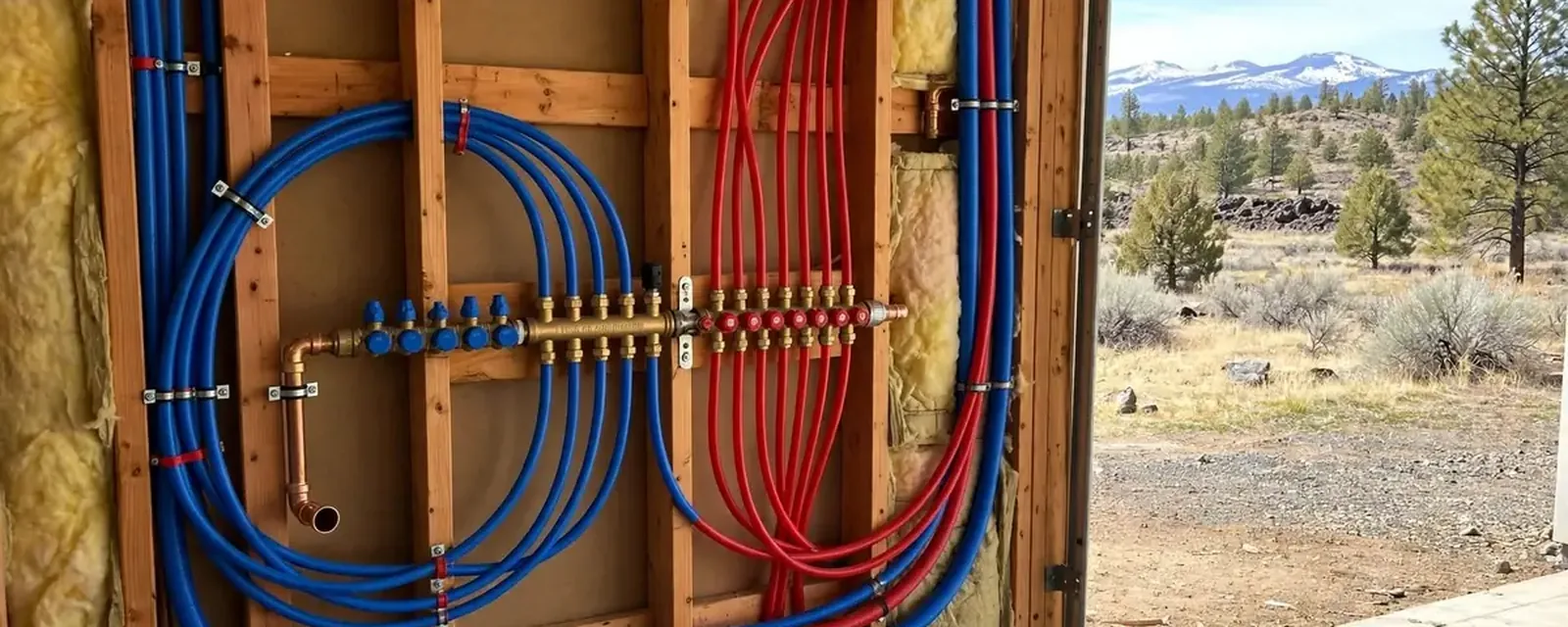
Signs that patching is not enough
One pinhole leak is a repair. Three in a year is a pattern. When old supply lines keep failing, the pipe itself is wearing out, and each patch only holds until the next weak spot gives way.
A repipe replaces those lines with new pipe so the house stops springing leaks. It is a planned job, not an emergency one, though a burst line at 2 a.m. can be what pushes people to call. The 24/7 line is open for those moments, and the repipe conversation can start once the water is stopped.
What old supply lines tend to show
None of these proves a repipe is needed, but several together make a strong case for a closer look.
- Pinhole leaks or damp spots that return after repairs.
- Brown, orange or cloudy water, especially after the line has sat unused.
- Water pressure that has dropped over time, at multiple fixtures.
- Green or white crust on pipe and fittings.
- Visible rust, flaking or bulging on exposed pipe.
- A recent or planned remodel that exposes the walls anyway.
Colored water can also have other causes, such as the water heater or the municipal supply. A plumber can help tell them apart.
Repair, partial repipe or whole-house repipe
The right scope depends on how much of the system is failing.
| Option. | Best when. | Trade-off. |
|---|---|---|
| Single leak repair. | One failure in otherwise sound pipe. | Cheapest in the short term, but another leak may follow. |
| Partial repipe. | One section such as a bathroom or kitchen run is failing. | Leaves older pipe elsewhere in the house. |
| Whole-house repipe. | Failures keep appearing in many places. | Largest job, with wall and ceiling access to plan around. |
| Repipe during a remodel. | Walls are already open. | Needs coordination with the other trades. |
A plumber can walk the house, check the pipe material you have, and say which row fits your situation.
How to know what pipe you have
Supply lines come in several materials, including copper, galvanized steel, PEX and plastic types that are no longer sold. Looking at exposed pipe in a basement, a utility room or under a sink often tells you what is there.
Do not assume the material from the age of the house. Previous owners may have replaced part of the plumbing and left the rest. A plumber can identify the pipe and tell you how it ages, which is more reliable than a guess from the year it was built.
If you see galvanized or older plastic pipe, ask for an opinion rather than waiting for a failure.
Burst line right now? Close the main water valve and call the 24/7 line. Repiping can be planned once the water is stopped.
Call (970) 708-6013What a repipe job looks like
Walk-through and plan.
The plumber traces the lines, checks fixture locations and talks through how to reach the pipe.
Protect and open.
The home is protected, and small openings are made in walls or ceilings to reach the old pipe.
Run the new lines.
New pipe is installed to each fixture, tested for leaks, and connected to the main supply.
Pressure test and restore.
The system is tested under pressure, and the access holes are closed or left ready for patching.
Drywall patching and paint are often separate trades. Ask what is included so you can plan the finishing work.
Low pressure and the pipe behind it
When pressure drops at every fixture, corroded or narrowed pipe is one possible cause, though a partly closed valve or a failing pressure regulator can do the same. The plumber checks these simpler causes first.
If the pipe turns out to be the problem, partial or whole-house replacement restores flow. If the leak is somewhere between the meter and the house, water line repair covers that outdoor stretch, and leak detection helps find where water is escaping inside a wall.
Digging, permits and the Town
Most repiping is done inside the house, but a service line replacement outside means digging. Colorado 811 is free and must be called at least two full business days before any digging so underground utilities are marked.
Rules on permits and inspections for plumbing work are set by the Town of Johnstown and the state, so ask the Town of Johnstown building department what applies to your project. You can also check any plumber's license at the Colorado DORA lookup, apps.colorado.gov.
What to do before the plumber arrives if an old pipe fails
A repipe is planned work, but a failing pipe can turn into an emergency. If one lets go, work through these steps first.
- Shut off the main water valve and open a faucet at the lowest point to drain the lines.
- Do not clamp, tape or over-tighten a corroded fitting, because the pipe around it may be as weak as the leak.
- Move belongings away from wet walls and floors, and keep power away from standing water.
- Take photos of the leak and of any rusty or discolored water for the plumber.
- Call the 24/7 line and describe where the pipe runs and what it looks like.
What drives the cost of a repipe
Repiping is a large job, so a plumber needs to see the house before naming a price.
- Size of the house More fixtures and longer runs mean more pipe and more labor.
- Number of stories Multi-story homes and basements change how pipe is routed.
- Access to the pipe Open walls, crawl spaces and unfinished basements are easier than finished ones.
- Pipe material Copper and PEX differ in material cost and installation time.
- Finishing work Patching drywall and paint after the pipe is in is an extra step.
Most homeowners policies cover sudden accidental water damage but not the cost of replacing worn pipe. A repipe done because of age is usually treated as maintenance. Read your own policy to see what yours says. Call (970) 708-6013 for a clear price before work starts.
Johnstown houses of different ages
Johnstown grew from 9,887 people in 2010 to 17,303 in 2020, so many homes are new and may never need a repipe in the near term. Older houses around the original townsite platted in 1902 are more likely to have had changes made over time.
If yours sits somewhere in between, the walls hide most of the pipe, so a plumber reads the exposed sections and your history of leaks to make a recommendation. Nearby Milliken and other towns we serve follow the same process.
Repiping questions
Repeated leaks, discolored water, falling pressure at many fixtures and visible corrosion are the main signs. One failure in a good pipe is a repair. A pattern of failures is a repipe conversation.
Yes. A single bathroom run, a kitchen line or one floor can be done without replacing everything. The plumber will tell you if the remaining pipe is likely to fail soon.
Yes, the 24/7 line at (970) 708-6013 is open for burst lines at night and on weekends. Closing the main valve first is the best move. Repiping, if needed, is scheduled once the water is stopped.
Usually for part of the job. The plumber will explain how the work is staged so you know when water is off and when it comes back.
Often yes. With walls open, adding a fixture, moving a line or replacing shutoff valves is easier. See plumbing installation for related work.
That is the service line, and it is handled separately from the lines inside. Call 811 first if any digging is involved.
Often not. Many homeowners stay in the house, though some choose to be away for the noisiest days. The plumber can tell you what is typical for your home.