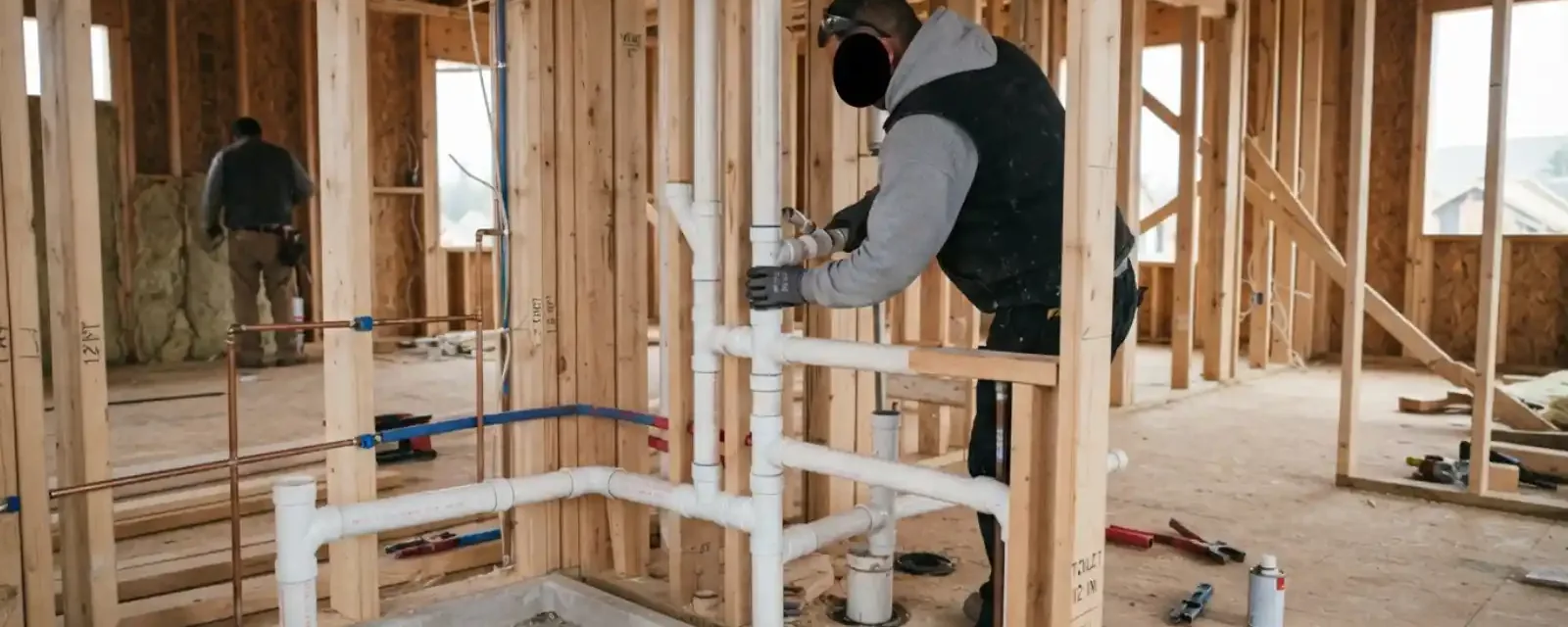
What counts as bathtub plumbing
Bathtub plumbing has two sides. The drain side carries used water out through a drain, an overflow and a trap to the house drain line. The supply side brings hot and cold water through a valve, up to a spout and often a showerhead.
Both sides need to be right before the wall closes. A drain that is set a little off, a valve at the wrong depth or a joint that was not tested can mean tearing out tile later.
This guide follows the order a plumber works in. It is useful if you are planning a remodel, comparing quotes or just want to understand the job before the crew shows up.
The order the work happens in
Most installs follow this sequence, whether the tub is new or a straight swap.
Check the rough-in.
The drain location, the valve box position and the framing are measured against the tub's specification sheet.
Set the drain and trap.
The trap, a U-shaped bend that holds water to block sewer gas, is connected to the house drain line below the floor with the right slope.
Connect the drain and overflow.
The tub drain and overflow tee are attached, sealed and checked for leaks before the tub goes in place.
Set the tub.
The tub is leveled on its base or mortar bed and fastened to the framing so it cannot shift.
Install the valve.
The hot and cold supply lines connect to the mixing valve, set to the depth the trim kit requires.
Run the spout and shower arm.
Supply lines run up to the spout and, if there is a shower, to the showerhead arm.
Pressure test and inspect.
The supply lines are tested and the drain is filled and checked before any wall covering goes up.
Filling the tub to the overflow and watching it for a time is the simplest way to catch a drain leak while the pipes are still in view.
Common bathtub plumbing parts and what they do
Knowing the parts makes it easier to read a quote or talk to your plumber.
| Part. | Job. | Problem if it is wrong. |
|---|---|---|
| Trap. | Holds water to block sewer gas. | Smells, gurgling, slow drain. |
| Overflow. | Catches water if the tub is filled too high. | Leaks inside the wall. |
| Drain and tailpiece. | Connects the tub bottom to the trap. | Drips under the tub. |
| Mixing valve. | Blends hot and cold water. | Temperature swings, hard-to-turn handle. |
| Spout and shower arm. | Delivers water to the tub or showerhead. | Leaks at the wall, weak flow. |
| Vent. | Lets air in so water drains freely. | Slow drain, gurgling at other fixtures. |
Tub leaking through the ceiling below? Close the shutoff for the bathroom or the main and call the 24/7 line.
Call (970) 708-6013Remodeling in Johnstown's older and newer homes
The original townsite around Parish Avenue was platted in 1902, so some Downtown Johnstown homes have decades of changes behind their walls. If you open a bathroom wall in an older house, expect to find supply lines and drain pipes of different ages and materials. A plumber can tell you on site whether any of it should be replaced while the wall is open.
Most of Johnstown is newer, since the town grew from 9,887 people in 2010 to 17,303 in 2020. Tubs in those homes usually sit over a slab or a framed floor with an accessible crawl space or basement below. That makes a drain easier to reach, but it also means any leak drips on something finished.
Before a remodel that moves the tub or changes the drain, ask the Town of Johnstown building department what permit and inspection rules apply. Do not rely on assumptions from another town.
Access and the floor below
The best time to install bathtub plumbing is when you can see everything. If the tub is over a basement or crawl space, a plumber can often reach the drain from below without opening the floor. If it sits on a slab, the work usually happens from above, and the drain may require cutting concrete.
Think about the floor above the tub as well. A second-floor bathroom puts the tub drain over finished ceilings, so a small leak shows up as a stain in the room below. Fill the tub and test the drain before closing anything up.
Whichever way the access runs, take photos of the pipes before the wall closes. A picture of where the valve and drain sit is helpful years later.
Swap or move: how the scope changes
Replacing a tub in the same spot with the same drain location is the simplest case. The plumber disconnects the old drain, sets the new tub and reconnects everything.
Moving the tub, switching to a different size or changing from a tub to a tub-and-shower combination changes the drain and often the venting and valve. That is a larger job and is best planned with a plumber before you buy the tub.
For the planning side, plumbing installation covers new fixtures, lines and hookups for remodels. If you find a leak while the walls are open, leak detection can trace it before you close up.
What to do before the plumber arrives
Clear the bathroom, take down towel bars and mirrors, and tell the dispatcher what you plan to change. Have the tub's installation sheet ready if you already bought it, because it lists the drain location and valve depth.
Locate the main water shutoff and the shutoff for the bathroom if there is one. Know how to turn them off before work starts.
The same crews serve Milliken and Mead. Give your address, the age of the house and whether the tub sits over a basement, crawl space or slab.
Bathtub plumbing questions
A like-for-like swap can be done by a skilled homeowner. Moving the tub, changing the drain or adding a valve is plumbing work that should be done by a licensed plumber.
The trap holds a small plug of water that blocks sewer gas from rising through the drain. A missing or dry trap lets odors into the bathroom.
Yes. Pressure test the supply lines and run water through the drain while everything is exposed. A leak found later means opening tile.
Yes, but the drain connection may require cutting the slab. A plumber can tell you what the existing rough-in allows and what a change would involve.
Rules vary by project and can change. Ask the Town of Johnstown building department before you start, particularly if the drain, vent or valve will move.
Check the trap, the overflow connection and the vent. A slow new drain is usually a slope or venting problem, not a clog.