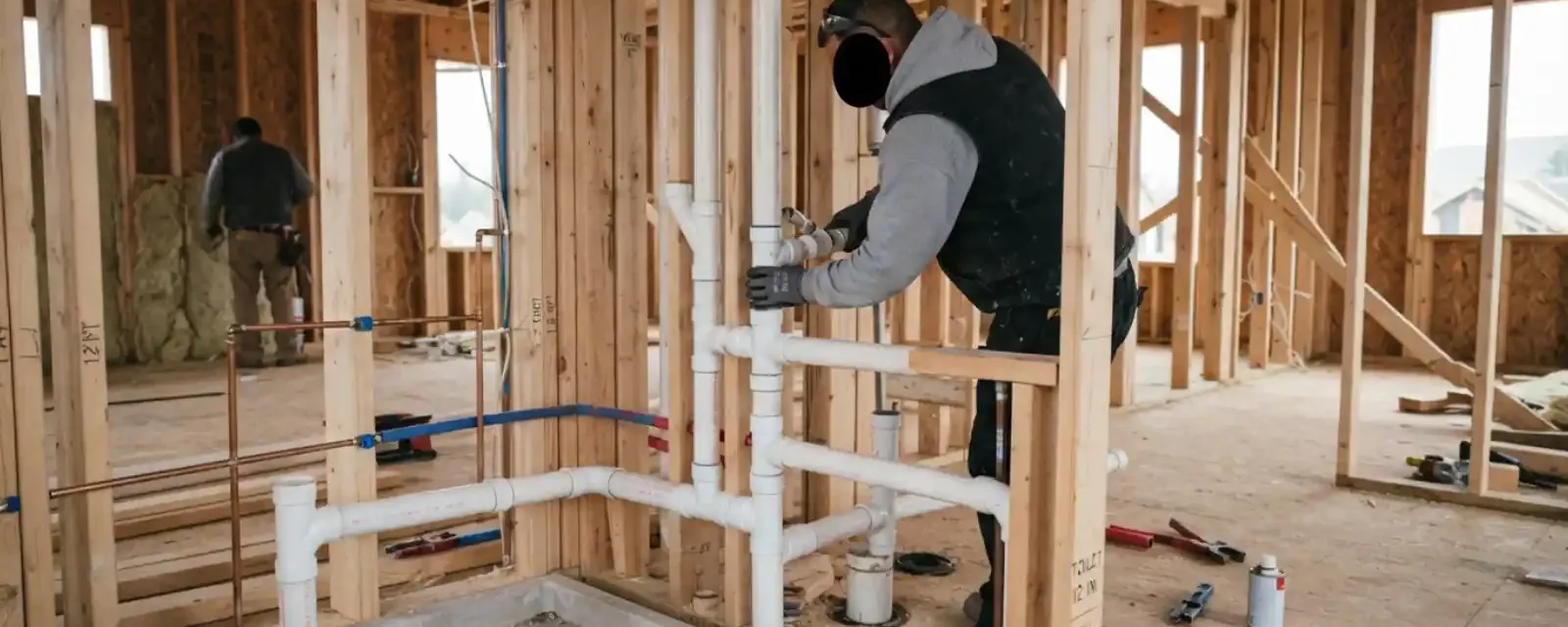
What plumbing installation covers in a Johnstown home
Installation is the planned side of plumbing. Nothing is leaking and nobody is in a hurry, but something new has to be connected, moved or added. That might be a second bathroom over the garage, a utility sink in the basement, or a refrigerator that needs a water line for the ice maker.
A plumber installs the supply lines that bring water to the fixture and the drain and vent lines that carry it away. The fixture itself comes last, once the pipes behind the wall are tested and holding pressure.
If your project is a swap of one fixture for another of the same kind, the job is simpler. Adding a fixture where none existed is the bigger piece of work, because the drain has to slope correctly and reach the main line.
How an installation job runs from first call to last test
Most installs follow the same path, whether it is one new sink or a full bathroom.
Walk the space.
The plumber looks at where the fixture will sit, how far it is from existing supply and drain lines, and what is behind the wall or under the floor.
Agree on the plan.
You get a clear price before work starts, along with a list of what is included, such as the fixture hookup, shutoff valves and any wall or floor opening.
Rough in the lines.
New supply and drain pipes are run and pressure tested while the walls are still open, which is the easiest time to catch a bad joint.
Set the fixtures.
Toilets, sinks, tubs, showers and appliances are connected, sealed and adjusted so they sit level and drain properly.
Test and walk through.
Water is run through every new connection, the drains are checked for slow flow, and you are shown where the shutoffs are.
Larger jobs may need an inspection between the rough-in and the final connection. Ask the Town of Johnstown building department what applies to your address before the walls are closed.
Common installs and what each one depends on
The same crew can handle all of these, but each job turns on a different question.
| Project. | What the plumber checks first. | What can add work. |
|---|---|---|
| New bathroom. | Distance to the nearest drain and vent. | A slab or finished floor that must be opened. |
| Bathtub or shower. | Framing, floor support and valve location. | Moving the drain or replacing a failed subfloor. |
| Kitchen or utility sink. | Existing supply stubs and trap height. | Extending lines through cabinets or masonry. |
| Toilet. | Flange condition and rough-in distance. | A damaged flange or a wobbly floor. |
| Appliance hookup. | Shutoff valves, drain access and venting. | Missing valves or a drain too far from the machine. |
| Outdoor hose bib. | Where the line can be tapped. | Digging, which calls for a locate first. |
For a toilet swap by itself, toilet repair and installation covers that job in more detail.
Have a project in mind? Call the line and describe what you want added. Same-day appointments are available when the schedule allows.
Call (970) 708-6013Remodels and additions: planning around the walls
Remodels go smoothly when the plumbing is decided before the drywall goes up. Tell the plumber about the layout early, including where the tub or vanity will land, so the lines are run once instead of opened up twice.
Basement finishes need extra thought. A bathroom below the level of the sewer line may need an ejector pump to lift waste upward, and that equipment has its own pit and discharge line. If the basement already has a damp history, look at basement waterproofing before closing in the walls.
Bring the plans, even a rough sketch. A plumber can usually tell from a drawing whether a fixture lands on a joist, a beam or an open stretch of floor.
Building in a fast-growing town
Johnstown went from 9,887 residents in 2010 to 17,303 in 2020, and the town's 2025 estimate is 22,433. That growth means a steady stream of new homes, finished basements and add-on bathrooms in neighborhoods spread across Weld and Larimer counties.
For you, the practical point is paperwork and timing. New construction and larger remodels usually need permits and inspections, and the rules come from the town or county, not from the plumber. Call the Town of Johnstown building department with your address before you pick a start date, then give the plumber the details so the schedule lines up.
Get ready before the plumber arrives
A little preparation shortens the visit and cuts down on surprises.
- Clear a path to the work area and move stored items away from the wall or floor in question.
- Know where your main water shutoff is, and test that it turns.
- Have the fixture, appliance or manufacturer specs on hand, including the model number.
- Take photos of the space now, especially any existing pipes or stubs you can see.
- Write down what you want in the finished room, such as a shower in place of a tub.
- Ask the building department whether a permit is needed and share that answer.
Gas appliances are a different matter. If you ever smell gas, leave the building first, then call the gas utility or 911 from outside. Do not stay to look for the source.
New construction and homes not yet finished
Builders usually handle the main plumbing, but homeowners often add to it afterward. Common requests are a water line to a garage sink, a laundry hookup in a room that was framed but never plumbed, or extra hose bibs around the yard.
Outdoor lines mean digging. Colorado 811 is free and must be called at least 2 full business days before any dig, so the buried utilities get marked. Do that before the first shovel goes in, and share the marks with the plumber.
If the supply to the whole house feels weak once the new fixtures are added, the problem may sit upstream. The water line repair and replacement page explains how the line from the meter to the house is checked.
What drives the price of a plumbing install
Two installs that look alike on paper can cost different amounts. These are the pieces that move the number.
- Distance to existing lines A sink on the same wall as the water heater is a short run. A bathroom at the far end of the house needs more pipe and more labor.
- What is in the way Open framing is quick. Finished walls, tile and concrete add opening and patching time.
- The fixture you pick Basic fixtures hook up quickly. Wall-hung toilets, freestanding tubs and multi-head showers take more setup.
- Drain and vent needs A drain that must slope across a long distance, or a vent that has to reach the roof line, changes the scope.
- Permits and inspections These depend on the project and the town, and the time to schedule them can affect when the job finishes.
Planned installs are not an insurance matter, because nothing has failed. If an install is replacing something damaged by a sudden leak, your homeowners policy may cover part of the work, so read your own policy. Call (970) 708-6013 for a clear price before work starts.
If something fails mid-project
Pipes get opened up during installs, and now and then an old line shows its age once the wall is open. The plumber will tell you what was found and whether it needs attention now or can wait.
Problems that cannot wait are covered around the clock, since Johnstown 24/7 Plumbing is open 24/7 for burst pipes, backups and leaks. See burst pipe repair if a line fails while the work is underway.
Plumbing installation questions before you start
Fixtures, supply lines, drain and vent lines, appliance hookups and outdoor hose bibs for remodels, additions and finished basements. Call (970) 708-6013 and describe the job so the plumber can come see the space before work starts.
Adding a bathroom usually triggers permit and inspection requirements, but the exact rules come from the Town of Johnstown or Weld County, depending on where the property sits. Ask the Town of Johnstown building department with your address, then share the answer with the plumber.
Both. A new toilet means checking the flange, the rough-in distance and the shutoff valve before setting the bowl. The toilet page explains what changes when the old one comes out.
Yes. The plumber installs a shutoff valve, runs the supply line and checks for leaks after the appliance is in place. A dishwasher also needs a proper drain connection, so it helps to have the machine on site.
It can be done, but waste may need to be lifted to the main line with an ejector pump. That adds a pit, a pump and a discharge line, so the plumber needs to see the space and the existing drain first.
Yes. Colorado 811 is free and must be called at least 2 full business days before digging. They mark buried utilities so nobody hits a gas, power or water line.
Leave the building right away, then call the gas utility or 911 from outside. Do not turn lights on or off, do not try to find the source, and do not go back in until you are cleared.