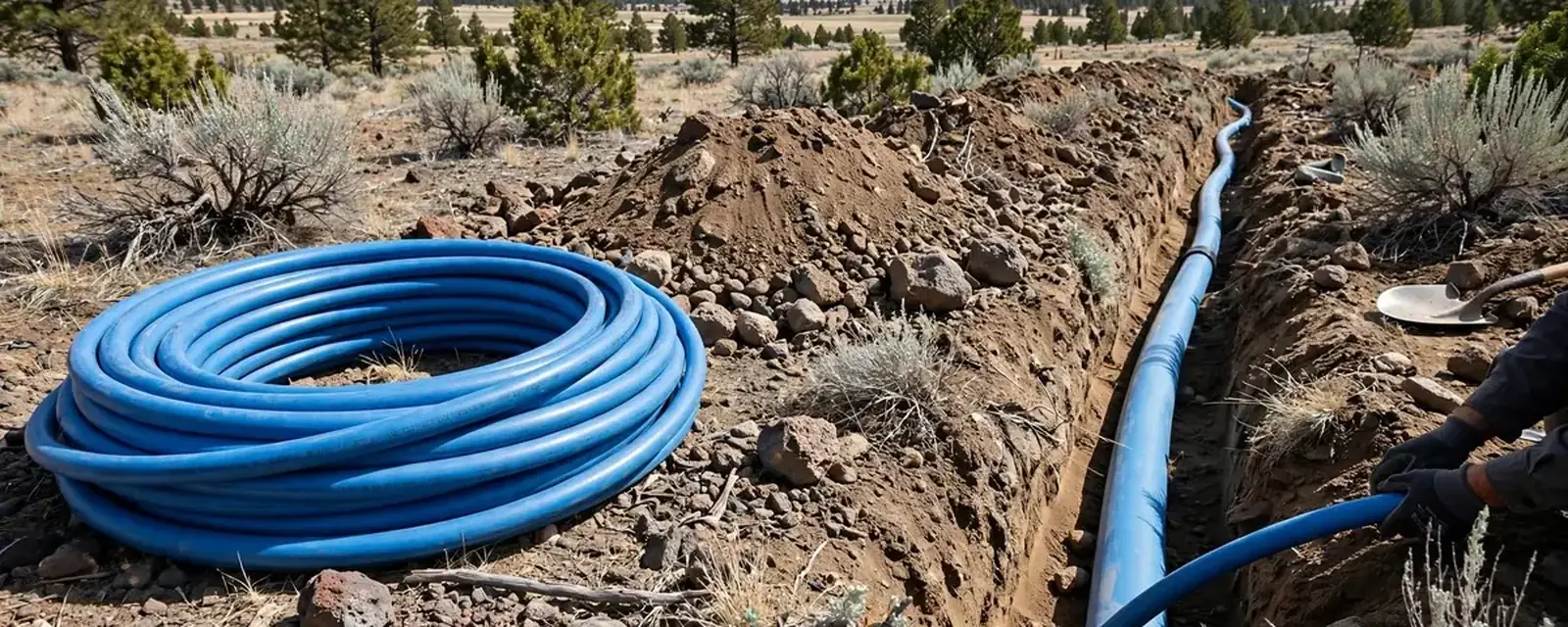
The water line runs from the meter to your house
Your water service line is the pipe that carries water from the meter at the street into the house. It is buried, so a leak can run for a long time before anyone sees it. When it finally shows, it usually looks like a soggy patch of lawn, a muddy spot near the meter box, or a sudden drop in pressure.
A water line repair finds the failed spot, digs to it or goes around it, and replaces the damaged length. Johnstown 24/7 Plumbing handles the pipe on your side of the meter, from the connection to the house, across Johnstown, CO.
Signs the buried line is leaking or failing
Most line leaks announce themselves in ordinary ways. Check these before you call.
- Wet or sunken ground between the meter and the house, with no sprinkler on.
- The meter dial moves while every fixture in the house is off.
- Water pressure drops across the whole house and does not come back.
- The water bill jumps with no change in how you use water.
- Muddy or discolored water at the taps after a repair upstream.
- A hissing or running sound near the main shutoff when nothing is on.
Several of these together point to the service line. One alone may be a fixture, such as a running toilet.
When a water line break is an emergency
A broken line can send water across a yard or under a slab fast. Use this order while you wait. The line at (970) 708-6013 is answered 24/7, including nights, weekends and holidays.
- Close the main shutoff valve inside the house, usually near the water heater or where the line enters the wall.
- If water is still flowing in the yard, tell the dispatcher. The curb or meter shutoff may be needed, and that belongs to your water utility.
- Keep people and pets away from pooled water near outlets, and avoid driving over a soft, sinking patch of ground.
- Do not run the washer, dishwasher or hot water heater with the supply shut off.
- Photograph the wet area and the meter before anything is dug up.
If the line is frozen and not leaking, do not use open flame to thaw it. The burst pipe repair page explains safe thawing steps.
Repair or replace the line: how the options compare
The right choice depends on where the line failed and how much of it is worn.
| Option. | Good fit when. | Trade-off. |
|---|---|---|
| Spot repair. | One clear break and the rest of the pipe is sound. | Other weak spots may fail later. |
| Full line replacement. | Leaks in several places or repeated repairs. | More digging and a longer job. |
| Trenchless or pull-in replacement. | Landscaping, a driveway or a patio sits above the line. | Not suited to every soil or route. |
| New line to a new service point. | Adding a building or moving a meter. | Needs utility coordination and a locate. |
A plumber looks at the soil, the route and the age of the line before suggesting one. Ask which option fits your yard.
No water, or water in the yard? Close the main shutoff and call. The 24/7 line is answered any hour.
Call (970) 708-6013Digging safely: call 811 first
Colorado 811 is free and must be called at least 2 full business days before digging. Utilities mark gas, electric, phone and water lines so nobody hits one. Skipping the call is how a water line repair becomes a gas emergency.
The plumber normally coordinates the locate on a planned replacement. On a true emergency, ask the dispatcher how the locate will be handled, and stay off the area until the lines are marked.
Low pressure and a line that stays wet
Low pressure is not always a line leak. A failing pressure reducing valve, a partly closed main valve or a clogged fixture can do it too. A leak shows up differently, since pressure drops everywhere and the meter keeps moving.
If you are not sure, a quick check at the meter and the main valve separates the causes. A buried leak you cannot see may need leak detection to pin down the spot before anyone digs.
Johnstown lots, growth and who owns which pipe
Johnstown grew from 9,887 residents in 2010 to 17,303 in 2020, and that growth means a mix of lot sizes and service line runs across town. The longer the run from street to house, the more yard there is to dig and restore, so ask about access when you compare quotes.
The Town runs its own water treatment plant, which makes the Town the first call about the meter and anything on the street side of it. The line from the meter to your house is generally the owner's, but the dividing point depends on the property. Ask the Town of Johnstown to confirm it for your address before you assume either side.
New homes, additions and replacement lines
Water line work is not only repair. New construction needs a service line run to the house, and some owners replace an old line before it fails. If you are unsure what material your line is made of, a plumber can check it when they uncover a section.
Adding a detached garage, shop or hose bib extends the same line. Those jobs fall under plumbing installation, and they follow the same locate rules.
What changes the price of a water line repair
Digging jobs vary a great deal. These are the factors that move the number.
- How deep and how far A short, shallow run is quick. A long run across a lawn or under a drive takes more time.
- What sits on top Grass is easy to restore. Concrete, pavers and landscaping add work.
- Pipe material and size Replacement pipe and fittings differ in cost and in how they are joined.
- Repair or replace One spot repair is smaller than a full run, but a worn line can fail again.
- Utility coordination Locates and any meter or shutoff help from the utility can affect the schedule.
Most homeowners policies do not cover the cost of repairing a worn line, though some cover damage to the home from a sudden break. Some add-on plans exist for service lines. Read your own policy and call (970) 708-6013 for a clear price before work starts.
Water line repair questions from Johnstown homeowners
Yes. The line at (970) 708-6013 is answered 24/7. Close the main shutoff inside the house, then call and describe what you see. The dispatcher will tell you what to do while a plumber is on the way.
Look for wet ground between the meter and the house, a meter that moves with everything off, a bill that jumped, or pressure that dropped throughout the house. If you see more than one, call and say so.
The line from the meter to the house is usually the homeowner's, while the Town handles the utility side. The exact dividing point depends on the property, so ask the Town of Johnstown to confirm it for your address.
Yes. Colorado 811 is free and must be called at least 2 full business days before digging. The plumber coordinates it on planned work. Ask the dispatcher how it works on an emergency repair.
No. A pressure reducing valve, a half-closed main valve or clogged fixtures can lower pressure too. A leak usually drops pressure everywhere and keeps the meter moving. A plumber can tell by checking the meter and the valve.
Sometimes. Pull-in and trenchless methods use small access pits, but they do not fit every soil or route. The plumber looks at the line, the surface above it and the depth before suggesting one.
If it has leaked more than once, if you are renovating, or if pressure keeps dropping, a plumber can look at the line and tell you whether a planned replacement makes sense. Planned work avoids a flooded yard at night.