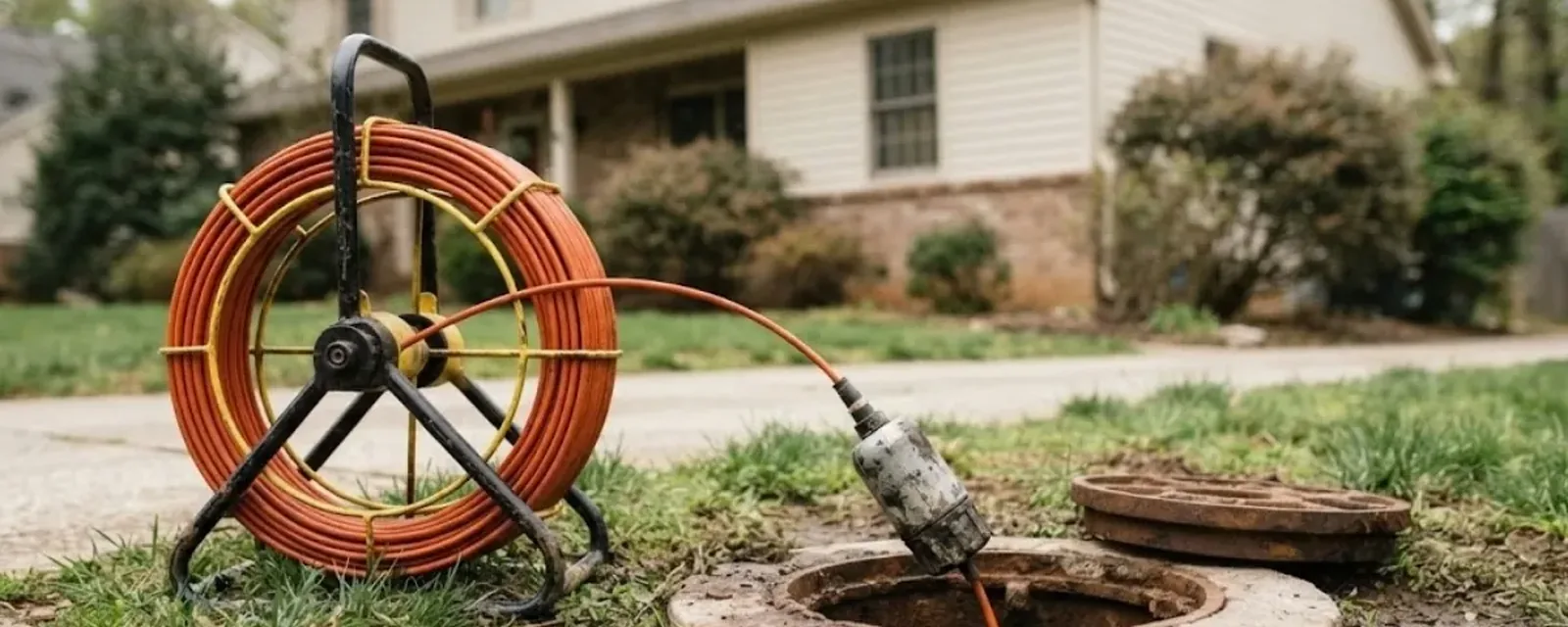
What a sewer camera actually shows you
A sewer line is buried, so nobody sees it until something goes wrong. A camera inspection solves that. The plumber feeds a waterproof camera head down the pipe from a cleanout and watches a live picture of the inside walls, joints and low spots.
Most callers phone after a clog keeps returning, a gurgle starts in the tub, or a cable machine stops short at the same spot. The camera answers the question that comes next, which is why the line keeps failing and what it would take to fix it.
Because the footage can be recorded, you can see the problem yourself instead of taking anyone's word for it. That matters when the next step is a repair bill.
Reasons to book an inspection before something breaks
You do not need a flooded basement to justify a camera. These situations are the usual reasons people schedule one.
- The same drain clogs again within weeks of being cleared.
- You are buying a house and want to know the condition of a line nobody can see.
- A cleaning crew's cable hit something solid and could not pass.
- A wet, sunken or unusually green patch of lawn sits along the path of the line.
- A sewage odor shows up in the yard, the garage or around a floor drain.
- You are planning a remodel or a new bathroom and want to know the line can handle it.
Any one of these is enough reason to call. If several apply, the inspection is almost certainly worth doing first.
How an inspection visit goes
The visit follows the same basic order every time, so you know what to expect when the plumber arrives.
Find the access point.
The plumber locates a cleanout, or pulls a toilet if the line has none, so the camera has a way into the pipe.
Run the camera.
The head travels toward the street while the plumber watches the monitor and notes the distance to anything unusual.
Mark and record.
Problem spots get measured, and the video is saved so you can look at the same footage the plumber saw.
Explain the options.
You hear what the camera found, how serious it is, and which repair or cleaning method fits, in plain language.
What the camera finds and what usually follows
Each finding points to a different next step. This table shows the common ones.
| On the screen. | What it means. | Typical next step. |
|---|---|---|
| Fine root hairs at a joint. | Roots found a small gap and are growing in. | Cleaning now, then monitoring or a spot repair. |
| Thick root mass. | A joint has opened enough for roots to take over. | Cutting or jetting, then repair of the joint. |
| Standing water in a dip. | A bellied section where pipe has settled. | Repair or replacement of that stretch. |
| Cracked or offset pipe. | A joint or section has shifted or broken. | Spot repair, lining or replacement. |
| Grease or scale on the walls. | A buildup narrowing the pipe. | Hydro jetting to scour the walls. |
| Clean, smooth pipe. | The line is sound and the clog was local. | Fix the fixture-level cause instead. |
Backups happening now? Do not wait for a booked visit. Call the 24/7 line and the plumber can clear the line first and bring the camera along.
Call (970) 708-6013Pipe lining, spot repair or replacement
Once the footage is in, the choice between repair methods usually comes down to how much of the line is damaged. A single cracked joint can often be handled as a spot repair. A long run of damage may call for lining or for replacing that stretch of pipe.
Those jobs are covered on the sewer line repair page. The inspection is what keeps you from paying for a full replacement when a short repair would do, or from patching a line that needs more.
If you ask about epoxy lining under a slab or trenchless methods, the camera result decides whether they are even possible. Pipe that has collapsed or shifted badly cannot be lined.
Johnstown homes, growth and the line under the yard
Johnstown grew from 9,887 people in 2010 to 17,303 in 2020, and the 2025 estimate is 22,433. That growth means a lot of houses in town are fairly young, while lots around the original Parish Avenue townsite platted in 1902 are much older. Pipe condition differs between those areas, so the camera is the only honest way to know what yours looks like.
If you are unsure who maintains the section of line near the street, ask the Town of Johnstown. Responsibility is usually decided by where your lateral meets the main, and that point is different from lot to lot.
What affects the price of a camera inspection
The cost depends on how easy the line is to reach and how much of it needs to be viewed.
- Access A working cleanout makes the visit simpler. Pulling a toilet to enter the line takes extra time.
- Length of the line A long run from a back bedroom bath to the street takes longer to travel than a short one.
- Cleaning first If grease or debris blocks the view, the line may need clearing before the camera can see anything.
- Locating Pinpointing a defect on the surface so a crew knows where to dig adds a step.
- Timing A booked weekday visit and an after-hours call are scheduled differently.
Most homeowners policies do not pay for an inspection that checks the condition of a line, though some cover related damage after a sudden event. Read your own policy to see what applies. Call (970) 708-6013 and describe the situation, and you get a clear price before work starts.
Septic, camera work and when to call about both
Some properties around the edges of town may be on septic instead of a municipal sewer. Whether yours is should be easy to confirm with the Town of Johnstown or Weld County. A camera can still help on the line between the house and the tank, but the tank itself needs a different kind of service.
Callers sometimes ask the dispatcher whether inspection and cleaning can happen in one visit. Often they can, because a line has to be clear before the camera can see it. See sewer line cleaning for what that part involves.
If a sewer backup starts in the middle of the night, the 24/7 line is the number to use. The camera can follow once the line is flowing again.
Sewer camera inspection questions
Many inspections are done in a short visit, but the time depends on the length of the line and what is in it. A line packed with grease or roots must be cleared first. The plumber will tell you what to expect once they see the cleanout.
Yes, ask the plumber to share the recording along with the findings. Having the footage helps if you get a second opinion, deal with an insurance question, or talk to a seller about a house you are buying.
Nothing on our side requires one, and any rules tied to a sale are set by others, so ask the Town of Johnstown building department what applies. Many buyers book one anyway because the line is buried and repairs can be expensive.
It can show cracks, offsets and standing water that point to a leak. For leaks in pressurized water lines, leak detection uses different tools. The dispatcher can tell you which one fits your symptoms.
Often yes. The plumber can enter through a pulled toilet or a roof vent in some homes. Installing a proper cleanout is worth discussing, because it makes every future visit faster.
No, it finds the cause. Cleaning or repair is a separate step, and you decide on it after seeing the footage. Many callers book cleaning the same day because the line has to be clear for the camera anyway.
Stop using water, call the 24/7 line at (970) 708-6013, and tell the dispatcher what is backing up. A backup is dealt with first and the inspection can follow once the line is open.