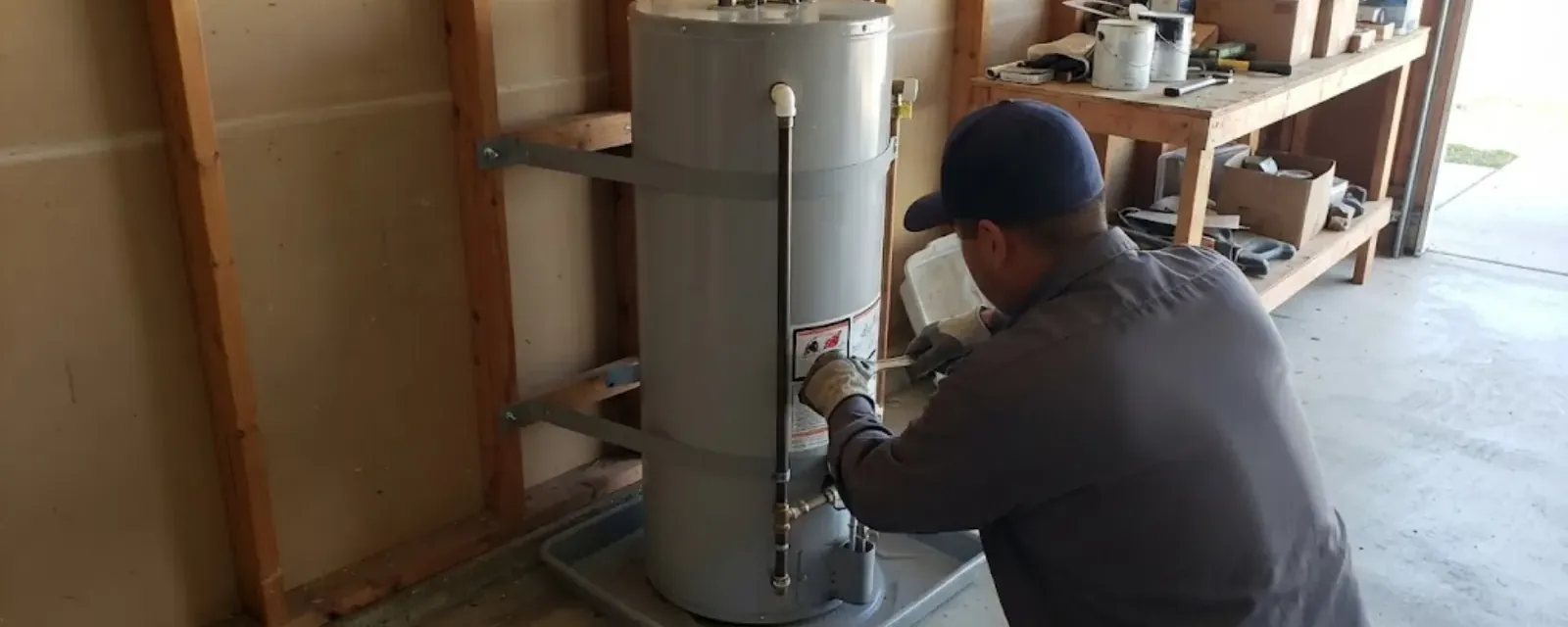
Water heater installation for Johnstown homes
Most installs fall into three groups. A new home or addition needs a first heater, a remodel moves one to a new spot, and an upgrade swaps an old unit for a different type or size. Each has its own set of questions, and a visit starts with a look at the space.
This page covers planned work. If your tank has already failed or is leaking, read emergency water heater replacement instead. The 24/7 line also handles water heater emergencies, and the dispatcher can tell whether your call needs same-day help or a booked slot.
What to settle before the plumber arrives
A few decisions shape the whole job. Having answers ready shortens the visit and keeps the quote honest.
- How many people live in the home, and how many bathrooms run at once on a busy morning.
- Which fuel you want. Natural gas, electric and heat pump units need different supply and venting.
- Where the heater will sit, and whether there is a floor drain nearby.
- Whether you want the unit near fixtures. Long runs of pipe waste water and delay hot water.
- Whether you plan a tankless unit later, since that changes gas line sizing.
If you do not know the answers, say so on the phone. The plumber will measure the space and talk you through the choices.
Fuel type and what the install needs
Each type of heater asks something different of the house. This is the short version.
| Type. | What it needs. | Watch for. |
|---|---|---|
| Natural gas tank. | Gas line, flue to outdoors, combustion air. | Venting and altitude instructions. |
| Electric tank. | A dedicated circuit sized to the heating elements. | Panel capacity in older or full panels. |
| Heat pump tank. | Space, airflow around the unit, a drain for condensate. | Cooler air in the room and fan noise. |
| Tankless gas. | Larger gas supply, special venting. | Often needs gas line changes. |
| Tankless electric. | Heavy electrical supply. | Panel upgrade is common. |
For tankless-specific planning, see tankless water heater service.
How the install day unfolds
Walk the space.
The plumber confirms clearances, the vent route and where the relief valve will discharge.
Set the base and pan.
A level platform and drain pan go down first, with a line to a floor drain where one exists.
Connect water.
New flexible connectors or copper, plus shutoff valves, go on the hot and cold lines.
Connect fuel and vent.
A gas unit gets a sediment trap, a tested gas connection and a properly pitched flue.
Add safety parts.
The relief valve and discharge pipe go in, and an expansion tank where the plumbing needs one.
Fill and test.
The tank fills with air bled from the lines. Then the plumber lights or energizes it and checks temperature.
Sizing, gas lines and altitude
Tank size follows household use. A two-person home and a house with four teenagers need different tanks, and picking by price alone is how people end up with cold showers.
For gas units, the line has to deliver enough fuel to the new burner, and the vent has to carry exhaust out. Johnstown sits at about 4,994 feet, and gas appliance makers publish altitude instructions for that reason, so the installer checks the manual for your model. Any gas smell during or after the work means leave the building first and call the gas utility or 911.
Expansion tanks and relief valves
A closed plumbing system cannot absorb the extra volume as water heats and expands. That pressure shows up as a dripping relief valve or worn fixtures. An expansion tank fixes it, and it is usually a small add-on to the install.
The temperature and pressure relief valve is the last safety. It needs a discharge pipe that points where water can drain safely and is never capped. Ask the Town of Johnstown building department about permit and inspection rules before you book.
Ready to book a planned install? Call (970) 708-6013 and tell the dispatcher the fuel, tank size and location. Same-day appointments are available when the schedule allows.
Call (970) 708-6013New homes, additions and the Johnstown growth years
Johnstown counted 9,887 people in 2010, 17,303 in 2020 and about 22,433 in the latest estimate, so installs here are often part of a new build or a basement finish. Whether the house is in Southridge, Johnstown Farms or a lot still being built, the heater should match the people who will live there.
If you are finishing a basement or adding a bathroom, a second heater or a larger tank may serve you better than the original. Hot water that has to travel the length of a house wastes water and patience.
What shapes the price of an install
Install quotes depend on the house more than on the product.
- Unit type Heat pump and tankless units cost more than a basic tank.
- Venting A short, straight flue is quick. A long or rerouted one adds parts and time.
- Gas and electrical work A new gas line, a bigger line or a new circuit are separate scopes.
- Code items Expansion tank, pan and drain line needs depend on the space.
- Haul-away Removing an existing unit adds a step.
Home insurance usually does not pay for a planned upgrade, only sudden accidental damage. Confirm with your insurer if you are unsure. Tell the dispatcher at (970) 708-6013 about the job and the price will be clear before work starts.
Water heater installation questions
A like-for-like swap often takes part of a day. New venting, gas line work or a new electrical circuit takes longer. The dispatcher gives a rough window once you describe the job.
Rules depend on the job, so ask the Town of Johnstown building department before the visit. Tell the plumber what they say. The plumber can explain what the install involves so you can ask the right question.
Size depends on how many people use hot water and how many fixtures run at once. The plumber asks about showers, a soaking tub, laundry and a dishwasher, then picks a tank or a tankless unit to match.
It is a small tank that absorbs the extra water volume as it heats. Systems with a check valve or pressure reducing valve often need one. The plumber checks your setup.
Gas connections, venting and combustion air carry real safety risks, including carbon monoxide. Hiring a licensed plumber is the safe route. You can confirm a license on the Colorado DORA license lookup before the visit.
Yes. The 24/7 line takes emergency calls too, such as a leaking tank or no hot water in winter. Planned installs are booked in daytime slots, and the dispatcher sorts the two apart on the call.
Sometimes. Tankless gas units need a bigger gas line and different venting, and electric ones need heavy wiring. A visit shows whether your space can take it, and the tankless page explains the details.