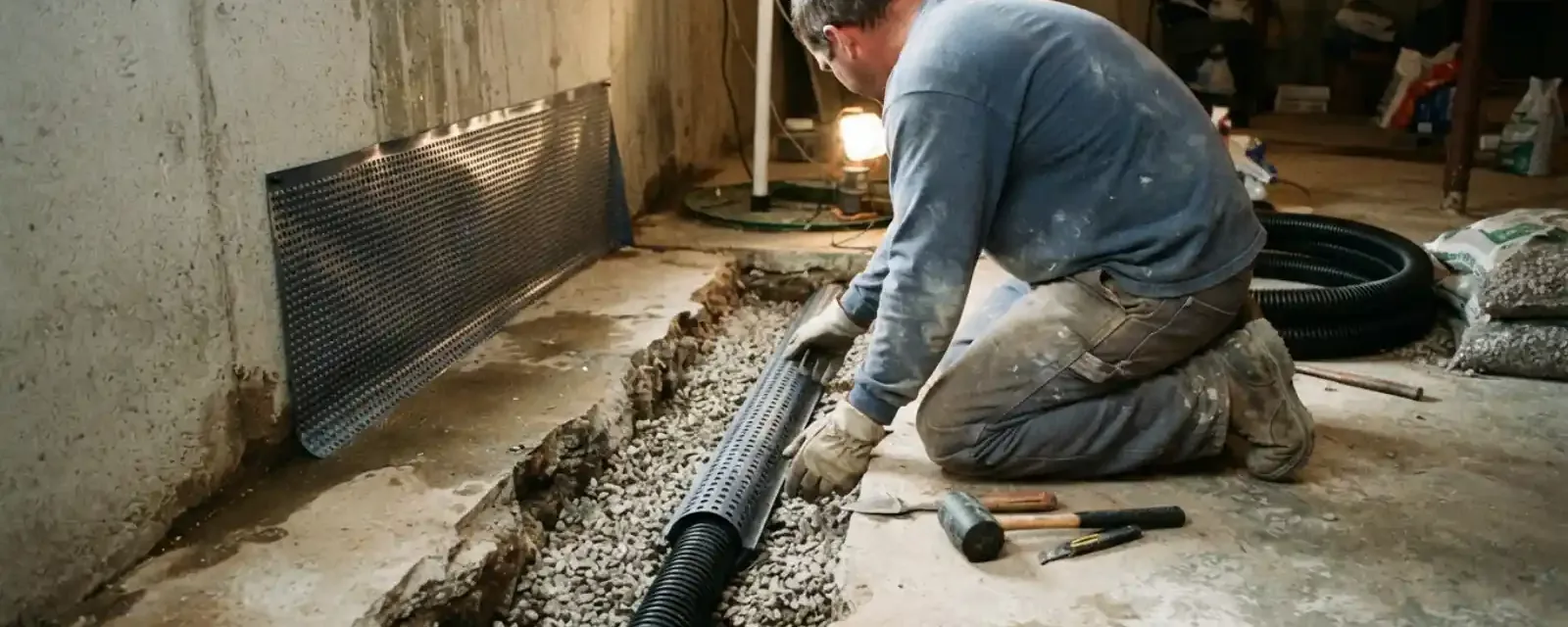
Why one basement costs far more than the next
Search for waterproofing prices and you will find wide ranges that mean very little for your house. Two basements on the same street can need completely different work, because the cost follows the water, not the square footage.
A basement that seeps once in a wet spring is a different job from one that floods after every heavy storm. Before anyone writes a number, a plumber needs to see where the water enters, how often, and how much has to be moved out of the house.
This guide covers the factors that drive the quote so you can compare bids on the same terms. It does not list dollar figures, because any figure printed without a visit would be a guess.
The factors that move a waterproofing quote
These are the questions behind almost every basement waterproofing estimate.
- Where the water comes from Groundwater pushing up through the floor slab is a different job from a cracked wall, a window well that fills, or a plumbing leak that only looks like seepage.
- How much of the perimeter is involved Draining one wall costs less labor than a system around the whole basement.
- Finished or unfinished Carpet, drywall, framing and built-ins have to be cut, moved or replaced to reach the slab edge and the wall base.
- Pump and discharge A pit, a pump, a backup pump and a discharge line that carries water well away from the foundation each add parts and labor.
- Access for equipment Tight stairs, low ceilings or a crowded utility room slow the work.
- Repairs outside Gutters, downspouts and grading that send water to the foundation are often cheaper to fix than the basement itself.
Most homeowners policies cover sudden, accidental water damage but not seepage, groundwater or gradual leaks, and flood coverage is usually a separate policy. Read your own policy and call your agent before you pay for work. For your real number, call (970) 708-6013 and describe what you see. You get a clear price before work starts.
Find out whether it is really groundwater
Many damp basements are not groundwater problems. A sweating cold pipe, a water heater tank that weeps at the fitting, a leaking washing machine hose or a slab leak can leave a wet floor that looks just like seepage.
Try this before you call. Tape a square of plastic wrap to a bare patch of wall or floor and leave it for a day. Moisture on the outside of the plastic is humidity, while moisture underneath came through the concrete.
Also look at the timing. Water that shows up a day or two after rain or snowmelt points to the ground. Water that appears at random, or only after laundry, points to plumbing, and the fix is a repair, not a waterproofing system. Leak detection sorts those cases out for a fraction of what a drainage system would cost.
Common basement water problems and the usual fix
The fix drives the price, so match the symptom to the likely work before you request quotes.
| What you see. | Likely source. | Typical fix. | Cost effect. |
|---|---|---|---|
| Damp strip along the wall base. | Water at the footing or a poor grade. | Regrade, extend downspouts, or add interior drainage. | Rises with the length of wall treated. |
| Puddles on the slab after storms. | Groundwater pressure from below. | Perimeter drain, pit and pump. | Rises with pump and pit work. |
| Water through a window well. | Well filling or flooded drain. | Clear the drain, add a cover, fix grade. | Often modest. |
| Wet floor with no rain. | Plumbing leak. | Find and repair the leak. | Usually repair only. |
| Pump runs often or never stops. | High water table or a failing pump. | Replace or add a pump and backup. | Rises with unit and discharge. |
Water coming in right now? Keep clear of wet outlets and call the 24/7 line. The dispatcher will ask where it is entering and how fast.
Call (970) 708-6013What the Johnstown area gives a basement to deal with
Johnstown sits at about 4,994 feet, west of the confluence of the Big Thompson and Little Thompson rivers, in Weld and Larimer counties. The September 2013 floods affected about 3,000 homes in Weld County, which shows how fast the ground in this part of Colorado can fill with water after hard rain.
For a homeowner, the lesson is to look at the lot first. Check that the soil next to the foundation slopes away from the house, that downspouts empty several feet out, and that window wells drain. These are cheap to fix, and they take pressure off any waterproofing system you install later.
Most of Johnstown is new construction. Johnstown grew from 9,887 people in 2010 to 17,303 in 2020, and settling soil around newer foundations can open gaps near the walls in the first few years. Document any new cracks with photos and dates so a contractor can see how they change.
Questions to ask every contractor
Ask each bidder to explain where the water enters and how their system gets it out. A vague answer means the quote may not fit your basement. Ask whether the plan includes a backup pump and where the discharge line ends.
Ask what happens to finished walls and flooring, who handles the repair afterward, and what the written scope covers. Get each quote in writing, with the same scope, so you are comparing like with like.
Be wary of anyone who names a big number over the phone, or pushes a full system before checking gutters, grading and plumbing. A plumber who sells sump pump installation and repair and drainage work should be willing to say when a smaller fix will do.
Before anyone digs
Any exterior work that breaks ground, such as new drains or regrading near the foundation, needs a call to Colorado 811 at least two full business days beforehand. The call is free, and it keeps crews away from buried gas, electric and water lines.
If a contractor says they will handle the 811 call, ask when it was placed and for the ticket number. Digging without the locate puts your family and the contractor at risk.
Ask the Town of Johnstown building department whether your project needs a permit. Do not rely on a contractor's memory for that, because rules can change.
Nearby towns, same questions
Homeowners in Berthoud near the Little Thompson, and in Greeley where the Cache la Poudre and South Platte shape the ground, ask the same questions. Both have seen flooding, and the answers about source, access and pumps apply wherever you live.
If you are not sure whether the water is from the ground or from plumbing, start by describing it on a call. Our team can tell you which service fits before anyone drives out.
Basement waterproofing cost questions
A range printed without a visit would be a guess. The cost depends on where the water enters, how much perimeter is affected, whether the basement is finished and what pump setup it needs. A plumber on site can give a real number.
Interior drainage usually avoids excavating around the house, which is why many homeowners choose it. Exterior work digs next to the foundation and needs a utility locate first. Which one fits depends on how the water gets in.
Policies generally cover sudden, accidental water damage and exclude seepage, groundwater and gradual leaks. Flood coverage is usually separate. Read your own policy and call your agent before you commit.
A pump removes water that collects in a pit, but it does not stop water from entering. Pumps are often one part of a system that includes interior drains. A plumber can tell you whether yours needs a pump alone or a full drainage run.
They can. Backfilled soil settles for a few years after construction, which can send water toward the foundation, and downspouts or grading problems show up quickly. Check the lot before assuming the foundation is at fault.
Lift items off the floor, stay away from outlets and appliances in standing water, and shut off power to the wet area if it is safe to reach the panel. Take photos for your insurance claim, then call (970) 708-6013.