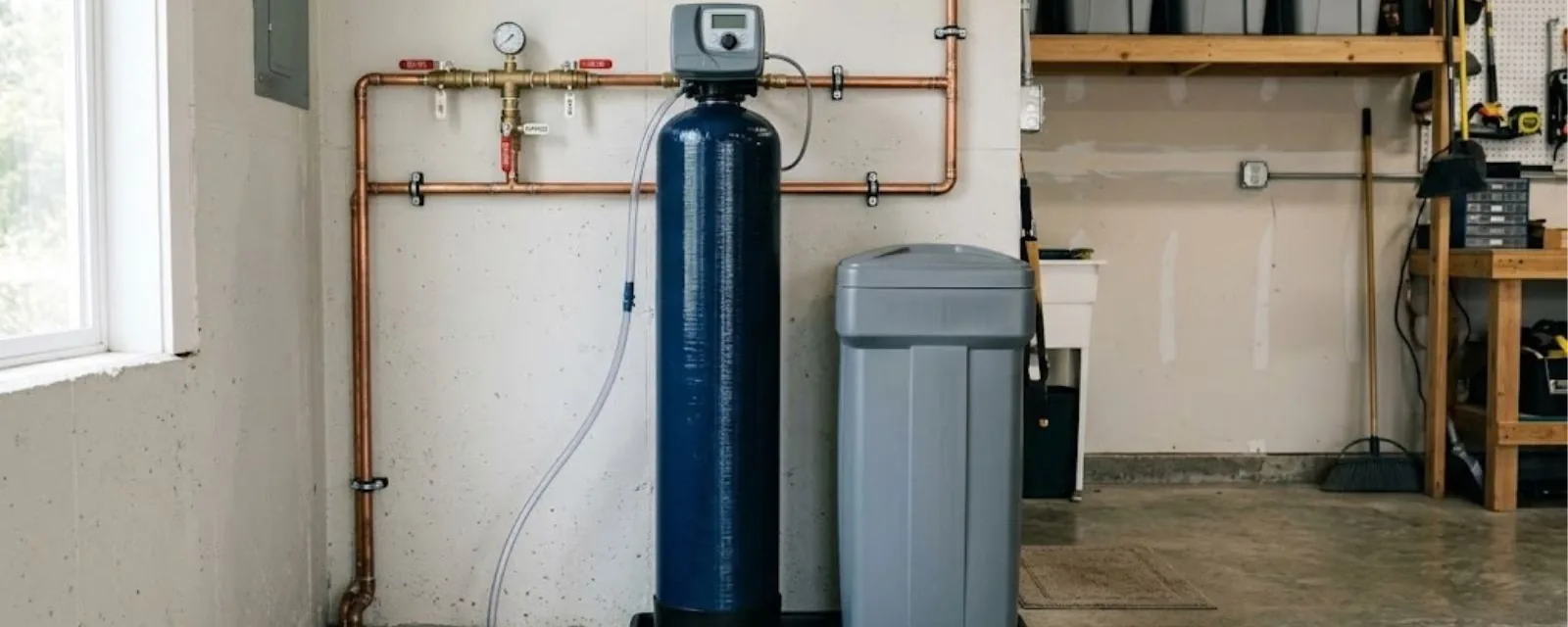
Test the tap before you buy anything
A softener only helps if the water has what a softener removes. Buying one before testing is how people end up with salt to haul and no change at the tap. The first step is a water test, either a test kit, a lab sample, or a report from your water provider.
We do not quote a hardness number for Johnstown here, because the number varies by source and by address. Ask your water utility, or test your tap. With a result in hand, a plumber can match the equipment to the water instead of guessing.
Signs your water may need treatment
These are the usual things people notice before they call.
- White or chalky scale on faucets, showerheads and the inside of the kettle.
- Spots on glasses and dishes after the dishwasher runs.
- Soap that does not lather well and leaves a film in the tub.
- Water heater that runs loud or loses efficiency from buildup.
- A metallic, earthy or chlorine taste or smell at the tap.
- Orange or brown staining in sinks and toilets.
Scale and taste problems have different fixes. A softener handles scale, while taste and odor usually call for a carbon or reverse osmosis filter.
Softener, filter or reverse osmosis: which does what
People often mix these up, so here is what each one is for.
| System. | What it does. | What it does not do. |
|---|---|---|
| Salt-based softener. | Removes the minerals that cause scale. | Does not filter taste, odor or chlorine. |
| Whole-house carbon filter. | Reduces chlorine taste and odor. | Does not stop scale. |
| Sediment filter. | Catches sand, grit and rust particles. | Does not soften or remove chemicals. |
| Reverse osmosis at the sink. | Polishes drinking water at one tap. | Treats only that tap. |
| Softener and filter together. | Handles scale plus taste at every tap. | Costs more and needs more upkeep. |
If you are on a private well, treatment is a different question. Test the well water first, and tell the plumber what the test found.
Ready to talk it through? Call and describe what you see at the tap. Same-day appointments are available when the schedule allows.
Call (970) 708-6013From water test to working softener
A good softener install follows a clear order.
Get a result.
Test the water, or pull your water report, so the system fits the problem.
Size the system.
Household size and the test result decide the capacity, and that decides how often it regenerates.
Pick the location.
The unit needs a spot near the main line with a drain, a drain line to a floor drain or standpipe, and a power outlet.
Install and connect.
The plumber adds a bypass valve, connects the supply and drain, and loads the salt.
Set and test.
The valve is programmed, the system is flushed, and you are shown how to add salt and use the bypass.
Outdoor taps are often kept on untreated water. Ask the plumber to leave the hose bibs off the softener loop.
Johnstown water, and why your address matters
The Town of Johnstown runs its own water treatment plant, and in November 2019 residents reported yellow water that was attributed to a changeover in the raw-water source. Water can change, and a one-time result may not describe what you get year-round.
Neighboring towns do not share one supply. Mead draws from Little Thompson Water District and Longs Peak Water District, while Berthoud uses purchased Little Thompson water and Carter Lake and Berthoud Reservoir supplies. The practical point is to test at your own tap and not borrow a neighbor's result.
Softener not working right
Softeners fail in ordinary ways. A salt bridge can form in the brine tank and stop the unit from regenerating. A stuck valve, a clogged injector, or a lost setting can also stop it. The signs are scale coming back, salt that never goes down, or water that runs on and on at the drain.
A plumber can check the valve, the brine tank and the settings, and tell you whether to repair or replace the unit. Older units may cost more to keep fixing than they are worth.
What changes the price of a water softener installation
The equipment and the plumbing around it both affect the total.
- System size A larger household or heavier water needs a bigger tank and a higher capacity.
- Equipment type A standard salt unit differs from a dual-tank, a filter pairing or a reverse osmosis add-on.
- Plumbing near the unit A close drain and outlet make for a simple install. Moving lines or adding a drain takes more.
- Removing an old unit Hauling away and replacing a failed softener adds time.
- Repair or replace A valve or injector fix costs less than a new unit, if the tank is sound.
Water treatment equipment is an upgrade, not a repair for sudden damage, so homeowners policies do not usually cover it. A softener leak that floods the floor may be covered as sudden water damage. Read your own policy, then call (970) 708-6013 for a clear price before work starts.
What a softener means for the rest of your plumbing
Softeners drain brine to a floor drain or standpipe during regeneration, so the drain has to be in good shape. If it backs up, drain cleaning clears the line.
Treated water can also change how a tankless unit performs, since scale is a common cause of failure. The tankless water heater page covers flush and descale service. Emergencies like a leak from the softener tank are covered 24/7, so call the line if water is on the floor.
Water softener questions from Johnstown homeowners
Test your tap or ask your water utility for the report. Scale on fixtures, spotted dishes and filmy soap point to minerals. A test confirms it and shows how large a system you need.
We do not state a number because it varies by source and address. Test your own tap or ask the water utility for the current report.
No. A softener removes scale-causing minerals. A filter handles taste, odor, sediment or chlorine. Some homes need both, and a plumber can explain which fits your results.
Yes, in many cases. The usual problems are a salt bridge, a stuck valve, a clogged injector or lost settings. If the tank or valve is worn out, replacement may cost less than repeated repairs.
Near the main water line, with access to a drain and a power outlet. Garages, basements and utility rooms work. The plumber also checks that outside taps stay off the softened line.
Yes. It flushes brine during regeneration, so it needs a floor drain, standpipe or laundry drain nearby. A plumber checks the drain is clear before setting the unit.
A plumber can install treatment equipment on a well system, but start with a lab test of the well water. Results guide the choice of softener, iron filter or other equipment.